When it comes to AI art (or "art"), it's hard to find a nuanced position that respects creative workers' labor rights, free expression, copyright law's vital exceptions and limitations, and aesthetics.
--
If you'd like an essay-formatted version of this thread to read or share, here's a link to it on pluralistic.net, my surveillance-free, ad-free, tracker-free blog:
https://pluralistic.net/2024/05/13/spooky-action-at-a-close-up/#invisible-hand
1/


--
If you'd like an essay-formatted version of this thread to read or share, here's a link to it on pluralistic.net, my surveillance-free, ad-free, tracker-free blog:
https://pluralistic.net/2024/05/13/spooky-action-at-a-close-up/#invisible-hand
1/

Ten wpis został zedytowany (2 lata temu)

Cory Doctorow
•Ostrzeżenie o treści: Long thread/2
2/
Cory Doctorow
•Ostrzeżenie o treści: Long thread/3
https://pluralistic.net/2023/09/17/how-to-think-about-scraping/
3/
Cory Doctorow
•Ostrzeżenie o treści: Long thread/4
https://pluralistic.net/2021/08/06/get-you-coming-and-going/#potemkin-research-program
After making transient copies of lots of works, the next step in AI training is to subject them to mathematical analysis. Again, this isn't a copyright violation.
4/
Cory Doctorow
•Ostrzeżenie o treści: Long thread/5
https://www.theguardian.com/books/2009/apr/03/agatha-christie-alzheimers-research
5/
Study claims Agatha Christie had Alzheimer's
Alison Flood (The Guardian)Cory Doctorow
•Ostrzeżenie o treści: Long thread/6
https://www.researchgate.net/publication/373950278_Lexicogrammatical_Analysis_on_African-American_Vernacular_English_Spoken_by_African-Amecian_You-Tubers
6/
Cory Doctorow
•Ostrzeżenie o treści: Long thread/7
https://www.ucl.ac.uk/english-usage/projects/ice.htm
7/
The International Corpus of English (ICE)
www.ucl.ac.ukCory Doctorow
•Ostrzeżenie o treści: Long thread/8
https://www.eff.org/deeplinks/2015/04/remembering-case-established-code-speech/
8/
EFF at 25: Remembering the Case that Established Code as Speech
Electronic Frontier FoundationCory Doctorow
•Ostrzeżenie o treści: Long thread/9
9
Cory Doctorow
•Ostrzeżenie o treści: Long thread/10
10/
Cory Doctorow
•Ostrzeżenie o treści: Long thread/11
https://en.wikipedia.org/wiki/De_minimis
Busting someone who takes 0.0000033% of your work for copyright infringement is like swearing out a trespassing complaint against someone because the edge of their shoe touched one blade of grass on your lawn.
11/
phrase referring to trivial use of copyrighted material
Contributors to Wikimedia projects (Wikimedia Foundation, Inc.)Cory Doctorow
•Ostrzeżenie o treści: Long thread/12
12/
Cory Doctorow
•Ostrzeżenie o treści: Long thread/13
This *might* be infringing (we're getting into some gnarly, unprecedented territory here), but again, even if it is, it wouldn't be a big hardship for model makers to post-process their models by comparing them to the training set, deleting any inadvertent memorizations.
13/
Cory Doctorow
•Ostrzeżenie o treści: Long thread/14
So here's the first nuance in the AI art debate: as a *technical* matter, training a model isn't a copyright infringement. Creative workers who hope that they can use copyright to prevent AI from changing the creative labor market are likely to be very disappointed in court:
https://www.hollywoodreporter.com/business/business-news/sarah-silverman-lawsuit-ai-meta-1235669403/
14/
Sarah Silverman Hits Stumbling Block in AI Lawsuit Against Meta
Winston Cho (The Hollywood Reporter)Cory Doctorow
•Ostrzeżenie o treści: Long thread/15
Well, sure, that's a possibility. The first thing to consider is the possible collateral damage of such a law. The legal space for scraping enables a wide range of scholarly, archival, organizational and critical purposes.
15/
Cory Doctorow
•Ostrzeżenie o treści: Long thread/16
16/
Cory Doctorow
•Ostrzeżenie o treści: Long thread/17
17/
Cory Doctorow
•Ostrzeżenie o treści: Long thread/18
https://books.google.com/ngrams/graph?content=fantods%2C+heebie-jeebies&year_start=1800&year_end=2019&corpus=en-2019&smoothing=3
And large language models fill all kinds of important niches, like the Human Rights Data Analysis Group's LLM-based work helping the Innocence Project New Orleans' extract data from wrongful conviction case files:
https://hrdag.org/tech-notes/large-language-models-IPNO.html
18/
Cory Doctorow
•Ostrzeżenie o treści: Long thread/19
This brings me to the most important point: *passing a new copyright law that requires permission to train an AI won't help creative workers get paid or protect our jobs*.
19/
Cory Doctorow
•Ostrzeżenie o treści: Long thread/20
https://pluralistic.net/2022/06/19/reasonable-agreement/
Publishers like the *New York Times* bitterly oppose their writers' unions:
https://actionnetwork.org/letters/new-york-times-stop-union-busting
20/
New York Times, Stop Union Busting
actionnetwork.orgCory Doctorow
•Ostrzeżenie o treści: Long thread/21
https://www.nytimes.com/2023/12/22/technology/apple-ai-news-publishers.html
21/
Cory Doctorow
•Ostrzeżenie o treści: Long thread/22
https://www.vice.com/en/article/5d37za/voice-actors-sign-away-rights-to-artificial-intelligence
22/
‘Disrespectful to the Craft:’ Actors Say They’re Being Asked to Sign Away Their Voice to AI
Joseph Cox (VICE)Cory Doctorow
•Ostrzeżenie o treści: Long thread/23
https://pluralistic.net/2023/02/09/ai-monkeys-paw/#bullied-schoolkids
23/
Cory Doctorow
•Ostrzeżenie o treści: Long thread/24
24/
Cory Doctorow
•Ostrzeżenie o treści: Long thread/25
https://pluralistic.net/2022/08/21/what-is-chokepoint-capitalism/
25/
Cory Doctorow
•Ostrzeżenie o treści: Long thread/26
26/
Cory Doctorow
•Ostrzeżenie o treści: Long thread/27
27/
Cory Doctorow
•Ostrzeżenie o treści: Long thread/28
28/
Cory Doctorow
•Ostrzeżenie o treści: Long thread/29
29/
Cory Doctorow
•Ostrzeżenie o treści: Long thread/30
https://memex.craphound.com/2011/07/08/creative-license-how-the-hell-did-sampling-get-so-screwed-up-and-what-the-hell-do-we-do-about-it/
30/
Cory Doctorow
•Ostrzeżenie o treści: Long thread/31
https://www.vulture.com/2023/02/de-la-soul-trugoy-the-dove-dead-at-54.html
31/
Cory Doctorow
•Ostrzeżenie o treści: Long thread/32
Back when sampling started, it wasn't clear whether it would ever be considered artistically important. Early sampling was crude and experimental.
32/
Cory Doctorow
•Ostrzeżenie o treści: Long thread/33
Having lived through that era, I'm prepared to believe that maybe I'll look back on AI "art" and say, "damn, I can't believe I never thought that could be real art."
But I wouldn't give odds on it.
33/
Cory Doctorow
•Ostrzeżenie o treści: Long thread/34
https://www.programmablemutter.com/p/large-language-models-are-uncanny
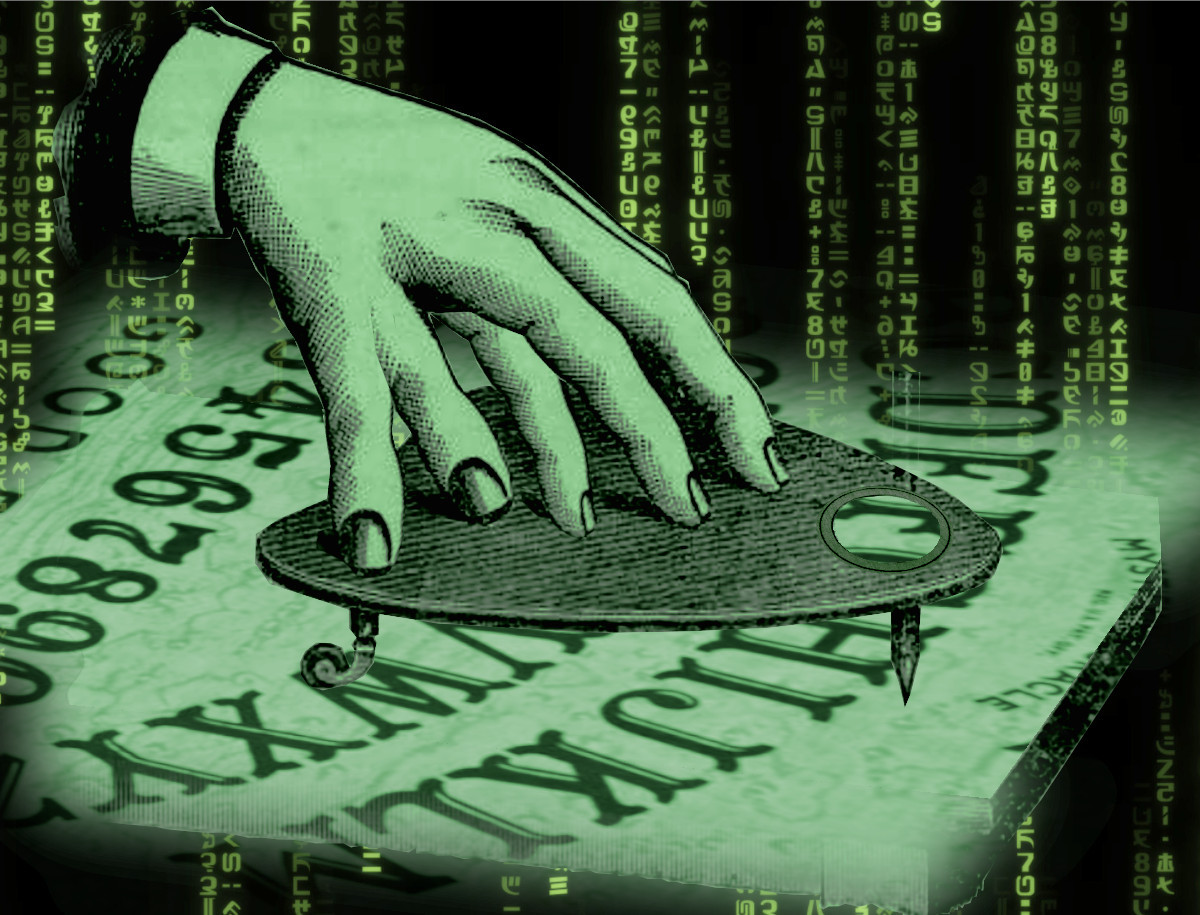
Farrell likens the work produced by AIs to the movement of a Ouija board's planchette, something that "seems to have a life of its own, even though its motion is a collective side-effect of the motions of the people whose fingers lightly rest on top of it."
34/
Large Language Models are Uncanny
Henry Farrell (Programmable Mutter)Cory Doctorow
•Ostrzeżenie o treści: Long thread/35
Look, art is irrational in the sense that it speaks to us at some non-rational, or sub-rational level. Caring about the tribulations of imaginary people or being fascinated by pictures of things that don't exist (or that aren't even recognizable) doesn't make any *sense*.
35/
Cory Doctorow
•Ostrzeżenie o treści: Long thread/36
But art is *amazing*. Making art and experiencing art makes us feel big, numinous, irreducible emotions. Making art keeps me sane. Experiencing art is a precondition for all the joy in my life.
36/
Cory Doctorow
•Ostrzeżenie o treści: Long thread/37
AI doesn't have a mind. It doesn't have an intention. The aesthetic choices made by AI aren't choices, they're averages.
37/
Cory Doctorow
•Ostrzeżenie o treści: Long thread/38
Farrell cites Mark Fisher's *The Weird and the Eerie*, which defines "weird" in easy to understand terms ("that which does not belong") but really grapples with "eerie."
38/
Cory Doctorow
•Ostrzeżenie o treści: Long thread/39
Fisher talks about *capitalism* as eerie. Capital is "conjured out of nothing" but "exerts more influence than any allegedly substantial entity."
39/
Cory Doctorow
•Ostrzeżenie o treści: Long thread/40
So will AI art ever be art? I don't know. There's a long tradition of using random or irrational or impersonal inputs as the starting point for human acts of artistic creativity.
40/
Cory Doctorow
•Ostrzeżenie o treści: Long thread/41
https://pluralistic.net/2022/07/31/divination/
Or Brian Eno's Oblique Strategies:
http://stoney.sb.org/eno/oblique.html
I love making my little collages for this blog, though I wouldn't call them important art. Nevertheless, piecing together bits of other peoples' work can make fantastic, important work of historical note:
https://www.johnheartfield.com/John-Heartfield-Exhibition/john-heartfield-art/famous-anti-fascist-art/heartfield-posters-aiz
41/
Oblique Strategies
stoney.sb.orgCory Doctorow
•Ostrzeżenie o treści: Long thread/42
42/
Cory Doctorow
•Ostrzeżenie o treści: Long thread/43
43/
Cory Doctorow
•Ostrzeżenie o treści: Long thread/44
I think today's AI art is bad, and I think tomorrow's AI art will *probably* be bad, but even if you disagree (with either proposition), I hope you'll agree that we should be focused on making sure art is legal to make and that artists get paid for it.
44/
Cory Doctorow
•Ostrzeżenie o treści: Long thread/45
https://pluralistic.net/2023/10/01/how-the-writers-guild-sunk-ais-ship/
Now, the writers had an advantage: they are able to engage in "sectoral bargaining," where a union bargains with *all* the major employers at once.
45/
Cory Doctorow
•Ostrzeżenie o treści: Long thread/46
46/
Cory Doctorow
•Ostrzeżenie o treści: Long thread/47
47/
Cory Doctorow
•Ostrzeżenie o treści: Long thread/48
https://pluralistic.net/2023/02/26/united-we-stand/
48/
Cory Doctorow
•Ostrzeżenie o treści: Long thread/49
https://pluralistic.net/2023/08/20/everything-made-by-an-ai-is-in-the-public-domain/
Neither AI companies nor entertainment companies will pay creative workers if they don't have to.
49/
Cory Doctorow
•Ostrzeżenie o treści: Long thread/50
Whether or not AI "art" will ever be good art isn't what our bosses are thinking about when they pay for AI licenses.
50/
Cory Doctorow
•Ostrzeżenie o treści: Long thread/51
https://pluralistic.net/2024/01/29/pay-no-attention/#to-the-little-man-behind-the-curtain
51/
Cory Doctorow
•Ostrzeżenie o treści: Long thread/52
52/
Cory Doctorow
•Ostrzeżenie o treści: Long thread/eof
https://www.oreilly.com/live-events/tim-oreilly-and-cory-doctorow-on-enshittification-and-the-future-of-ai/0642572001651/
Wednesday (May 15), I'm in North Hollywood for a screening of Stephanie Kelton's *Finding the Money*:
https://www.laemmle.com/film/finding-money?date=2024-05-15
Friday (May 17), I'm in San Francisco at the @internetarchive to keynote the tenth anniversary of the @AuthorsAlliance:
https://www.authorsalliance.org/2024/03/15/authors-alliance-10th-anniversary-event-authorship-in-an-age-of-monopoly-and-moral-panics/
eof/
Tim O’Reilly and Cory Doctorow on “Enshittification” and the Future of AI
www.oreilly.comMarkus Werle
•Markus Werle
•Cory Doctorow
•No, copyleft licenses don't trump fair use,, de minimis, and other limitations and exceptions.
CC, GPL, etc are licenses for things you need permission to do.
Fair use are things you don't need permission to do, so you don't need to license those uses, so you aren't bound by sharealike or other clauses.
Markus Werle
•1. Current legal situation. Do you think the legal setting is clear and covered by fair use? Note that my complete code is scraped.
2. Possible future legal situation that pursues the idea that you must not make money with derivatives of my work
Cory Doctorow
•Neither of these apply. The first third of my essay explains in detail why model training isn't infringing, so I won't rehearse that here.
If it's not infringing, then it doesn't require a license to undertake.
If a user need not license a work to make some use of it, they need not abide by license terms, either.
You're having a labor issue, and you're trying to solve it with copyright, and it won't work well or at all.
Markus Werle
•Markus Werle
•Cory Doctorow
•Markus Werle
•We may face the similarity problem envisioned by Kevin Kelly in "The library of Forms" https://kk.org/mt-files/outofcontrol/ch14-a.html
bensomers
•1. No mention of "commercial impact" prong of fair use - LLMs directly diminish the market for the original works (esp. stuff like promoting midjourney with "in the style of X").
2. The memorization problem isn't easy - it's impossible. LLM providers today are accounting for it on a vanishingly small number of potential outputs, and it's not by altering the models (they basically can't). It's by slapping output filters on at the end.
Cory Doctorow
•Commercial impact wouldn't apply to the model, it would apply to the *use* of the model.
In Betamax, SCOTUS held that a tool doesn't infringe provided it can "sustain a substantial non-infringing use." There is no question that an LLM can sustain a substantial noninfringing use, e.g., analyzing police reports for New Orleans Innocence Project.
A user of an LLM might infringe copyright, but the LLM itself doesn't.
Cory Doctorow
•1. It's either impossible or nearly impossible to make a copyright principle that bans AI and doesn't break collage; and
2. Such a law wouldn't prevent artists' bosses from trying to fire us and replace us with AI, because they want to fire us and they have huge corpuses of copyrighted works they're *already* licensing for AI training *for the express purpose* of firing us.
Cory Doctorow
•a) An enormous amount of collateral damage inflicted on unrelated activity, including, but not limited to collage;
b) A minor shift in the relative distribution of misappropriated creative wages, from the tech companies that hate us and want us to starve to the entertainment companies that hate us and want us to starve.