Today I was able to participate in a Zoom meeting for the OSM Africa Mapathon where I was able to get more in depth training on mapping and I was able to finish tasks #699, #769, #784 but I still left them to be looked at by mappers more skilled than myself. Along with that we did a Kahoot with questions on OSM. I learned a lot and I hope I’m able to do something similar soon. I also hope from now on I’ll find the time to work on even more projects with my new found skills.
Zoom Meeting for OSM Africa Mapathon and Beginner Training
Today I was able to participate in a Zoom meeting for the OSM Africa Mapathon where I was able to get more in depth training on mapping and I was able to finish tasks #699, #769, #784 but I still left them to be looked at by mappers more skilled than…OpenStreetMap

Yesterday I had a call with the coordinator of Unique Mappers Network after trying to reach out for 2 weeks. This is a very exciting moment for me as I’ve been wanting to volunteer for Unique Mappers Network for a while due to my interest in urban planning and development. Along with my want to volunteer to build a portfolio for my further education as I am still in senior secondary two. I hope that I can develop my mapping skills even further and help both my community and those internationally.
We maintain NoEscape 2.0 (https://nemap.fyi/), a public map built from
Ukraines open court registry: decisions describing border-crossing attempts
(mostly article 204-1) are geocoded and published as derived points - never
exact coordinates, never pe…
Ukraines open court registry: decisions describing border-crossing attempts
(mostly article 204-1) are geocoded and published as derived points - never
exact coordinates, never pe…
Mapping detention cases from court texts: border signs, oblast boundaries, offline maps
We maintain NoEscape 2.0 (https://nemap.fyi/), a public map built from Ukraines open court registry: decisions describing border-crossing attempts (mostly article 204-1) are geocoded and published as derived points - never exact coordinates, never pe…OpenStreetMap
We maintain NoEscape 2.0 (https://nemap.fyi/), a public map built from
Ukraines open court registry: decisions describing border-crossing attempts
(mostly article 204-1) are geocoded and published as derived points - never
exact coordinates, never pe…
Ukraines open court registry: decisions describing border-crossing attempts
(mostly article 204-1) are geocoded and published as derived points - never
exact coordinates, never pe…
Mapping detention cases from court texts: border signs, oblast boundaries, offline maps
We maintain NoEscape 2.0 (https://nemap.fyi/), a public map built from Ukraines open court registry: decisions describing border-crossing attempts (mostly article 204-1) are geocoded and published as derived points - never exact coordinates, never pe…OpenStreetMap
For more than 2 weeks now, Somtochukwu has been passionately following up for an orientation and integration as a volunteer at Unique Mappers Network. He is currently a Senior Secondary School 2 student in Lagos and has reached out to Unique Mappers to volunteer and map unmapped areas in OpenStreetMap. I am so excited to have him at this orientation so he can proceed to contribute to the OpenStreetMap project. Please . join me to welcome Somtochukwu to the world of OpenStreetMap as he signs up for a username and starts mapping !!!
hello! this is a basic draft to work on a possible import of static elevator/escalator data from the MTA largely to support potential work to show live availability data in Transitous.
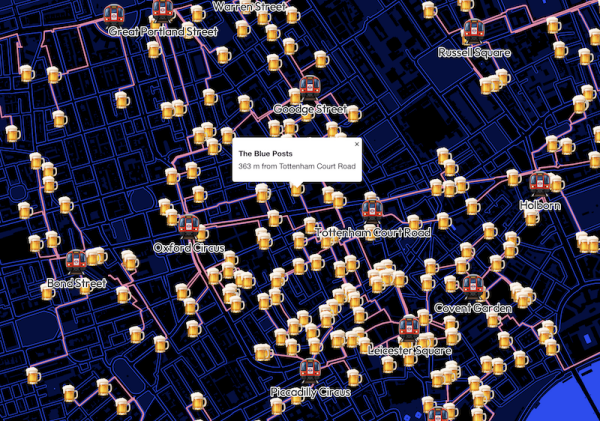
Tonights London pub meet-up is at the Blue Posts. An old favourite!
This is just a reminder for myself on what to focus on to improve OSM-based navigation

I build Tisseur de Voies, a site that computes loops where you ride one way and take the train back.
Heritage railways fit that model well, because many of them carry bikes for free in a dedicated van,
where regular regional trains count them.
Heritage railways fit that model well, because many of them carry bikes for free in a dedicated van,
where regular regional trains count them.
This is mostly a test post to see how the blog feature works. If you are reading this, hello.
I’ve recently resumed contributing, and have transitioned from focusing on Paola, KS to Lawrence, KS. This is a move I hope to also make in real life in early 2027; until then it will mostly be working off of Esri aerial imagery and mapillary street level photos.
Once moved I’ll be able to survey things properly, and in the medium term after that the hope is also to start to capture 360 camera imagery by bicycle. I don’t have one due to price and the fact that I couldn’t justify one when mapping Paola.
Things that have caught my interest: - Adding parking downtown - Seeing if I like micro mapping things like land use. (will probably do this as a palette cleanser between working on other groupings of tasks) - Adding crossing ways to the bike paths instead of just nodes - Finding bicycle parking and repair stands - Trolling around finding new cycleways on the roads (the city seems to have added a lot of sharrows since the last time someone did this)
The bike route signage situation on the ground is a bit unclear. In some areas the mapillary coverage is good enough to start to tackle that now. In lower traffic areas it will probably be necessary to be in the area to handle properly. Bicycle route relations exist for the area, but seem to have been done by several people and don’t have a coherent style. Making them consistent will likely be a long term project that will require actually having the local network already in my head.
I’ve recently resumed contributing, and have transitioned from focusing on Paola, KS to Lawrence, KS. This is a move I hope to also make in real life in early 2027; until then it will mostly be working off of Esri aerial imagery and mapillary street level photos.
Once moved I’ll be able to survey things properly, and in the medium term after that the hope is also to start to capture 360 camera imagery by bicycle. I don’t have one due to price and the fact that I couldn’t justify one when mapping Paola.
Things that have caught my interest: - Adding parking downtown - Seeing if I like micro mapping things like land use. (will probably do this as a palette cleanser between working on other groupings of tasks) - Adding crossing ways to the bike paths instead of just nodes - Finding bicycle parking and repair stands - Trolling around finding new cycleways on the roads (the city seems to have added a lot of sharrows since the last time someone did this)
The bike route signage situation on the ground is a bit unclear. In some areas the mapillary coverage is good enough to start to tackle that now. In lower traffic areas it will probably be necessary to be in the area to handle properly. Bicycle route relations exist for the area, but seem to have been done by several people and don’t have a coherent style. Making them consistent will likely be a long term project that will require actually having the local network already in my head.
Fall 2026
This is mostly a test post to see how the blog feature works. If you are reading this, hello.OpenStreetMap
Log 1
7:00 PM 19/08/2026
Beginning of Aubin Grove Development. Preview of my home-suburb on the OSM map provides little to no information of locations and landmarks. Using memory of my previous home when I was a child, I was able to remember parts of the house people wouldn’t be able to see on a map very easily with the low-resolution satellite imagery. House address 12 Cape Le Grand Avenue is added for the first marked residential building in Aubin Grove.
Locating my original Primary School, Aubin Grove Primary School, was easy from memory. I noticed multiple discrepancies and immediately improved to location. All discrepancies were fixed and possibly more zones will be added in the future logs.
7:00 PM 19/08/2026
Beginning of Aubin Grove Development. Preview of my home-suburb on the OSM map provides little to no information of locations and landmarks. Using memory of my previous home when I was a child, I was able to remember parts of the house people wouldn’t be able to see on a map very easily with the low-resolution satellite imagery. House address 12 Cape Le Grand Avenue is added for the first marked residential building in Aubin Grove.
Locating my original Primary School, Aubin Grove Primary School, was easy from memory. I noticed multiple discrepancies and immediately improved to location. All discrepancies were fixed and possibly more zones will be added in the future logs.
Every single driveway and sidewalk connection on every road beginning with A has been done. 17 of… 602. AGH.
Fucking diaries? Hell yeah. Anyways, I wanna clean my town up. Driveways and sidewalks are woefully unmapped… I have little idea what I’m doing on a styleguide level. Stared at the wiki, learned a little bit of Overpass to pull up a list of every road in town, and now I’m just alphabetically working through it all…
Day 1
Fucking diaries? Hell yeah. Anyways, I wanna clean my town up. Driveways and sidewalks are woefully unmapped I have little idea what Im doing on a styleguide level.OpenStreetMap
New here, but excited to help. I’ve been using StreetComplete on my commute to help get some things updated and cleaned up here in Vermont
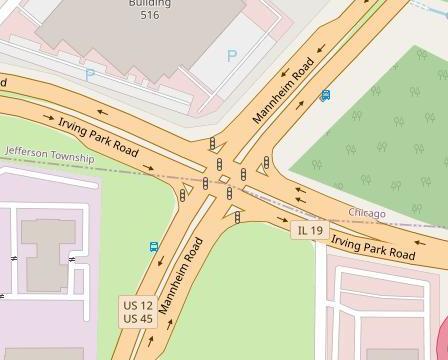
Many routers, such as OSRM, set penalties for barriers like traffic lights or at-grade crossings, to estimate time lost at these points. For intersections with traffic lights, the standard procedure is to put a tag of at the intersecting node.
I run cyclists.com, a library of cycling routes. Every route page tries to answer what a rider wants to know before setting off: how much of it is on busy roads, whether it is paved, where the water and cafés are.
I run cyclists.com, a library of cycling routes. Every route page tries to answer what a rider wants to know before setting off: how much of it is on busy roads, whether it is paved, where the water and cafés are.
I maintain OSM Edit MCP, an MIT-licensed Python tool that connects an MCP-compatible AI assistant to an OpenStreetMap survey-review workflow. It is alpha software, and I would welcome feedback from mappers on its review steps and failure cases.

Track location number and house number

When OpenStreetMap put a slippy map on its front page on its front page in 2005 it used a Mercator map.

I am happy to announce that we, the OpenStreetMap Carto maintainers, have prepared a new release of the OpenStreetMap Carto stylesheet (the default stylesheet on the OSM website). Once changes are deployed on openstreetmap.

recent hdyc.neis-one.org feature update is really something else. it forces you to read “that thing”. sometimes i accidentally read something that makes my blood boil.
alright, instead of replying there, i’m gonna reply to it here instead.
place=city: The largest settlement within a territory, including national, state and provincial capitals, and other major conurbations (an extended urban area, typically consisting of several towns merging with the suburbs of one or more cities).
place=town: An important urban centre that is larger than a village, smaller than a city, and not a suburb. Towns normally have a good range of shops and facilities which are used by people from nearby villages.
place=village: A smaller distinct settlement, smaller than a town, with few facilities available, with people travelling to nearby towns to access these.
place=hamlet: An isolated settlement.
i can confirm by myself that “that place” is not isolated.
meanwhile, administrative borders should be mapped as ways/relations properly. for a node, just stick with this global consensus definition as stated on the wiki page.
but where can we get that administrative border data?
someone in “that Telegram” group claimed to own all the copyright to this country’s administrative data, even though it is clearly already licensed as open data on “that site”.
i’m not a lawyer, so i don’t know the legality of manually tracing that border from an official source. this is why i hate mapping from official sources. i’d rather stick to local knowledge and direct surveys.
and… that’s it, pretty much.
alright, instead of replying there, i’m gonna reply to it here instead.
place=city: The largest settlement within a territory, including national, state and provincial capitals, and other major conurbations (an extended urban area, typically consisting of several towns merging with the suburbs of one or more cities).
place=town: An important urban centre that is larger than a village, smaller than a city, and not a suburb. Towns normally have a good range of shops and facilities which are used by people from nearby villages.
place=village: A smaller distinct settlement, smaller than a town, with few facilities available, with people travelling to nearby towns to access these.
place=hamlet: An isolated settlement.
i can confirm by myself that “that place” is not isolated.
meanwhile, administrative borders should be mapped as ways/relations properly. for a node, just stick with this global consensus definition as stated on the wiki page.
but where can we get that administrative border data?
someone in “that Telegram” group claimed to own all the copyright to this country’s administrative data, even though it is clearly already licensed as open data on “that site”.
i’m not a lawyer, so i don’t know the legality of manually tracing that border from an official source. this is why i hate mapping from official sources. i’d rather stick to local knowledge and direct surveys.
and… that’s it, pretty much.

For ages, Ive been wanting to tell my stories around a specific place in OSM. Not specifically a “review” of a business, but simply a personal anecdote about me and that particular place.

Alright. Day two. As I finally have some free time to write this one.

September 6–12
September 8
- Fixed David Lane and Country Brook Lane.
- Modified Rickly Street; added note that signage by the Street Department is incorrect. Correct spelling is Rickly Street, not Rickley Street. (Contacted city and should be fixed soon with new work order)
- Added a driveway and multiple road names (Buckeye Alley, Cherry Alley, Hickory Alley, Elm Alley, Maple Alley, Ash Alley, Walnut Street, Cypress Alley, and the rest of Beech Alley).
- Added info to (now closed) Hannah J Ashton Middle School.
- Added Unzinger Ditch and name of Dysar Run.
This summer I had the chance to spend my second Google Summer of Code working with the OpenStreetMap Foundation, this time on closures.osm.
Nothing in OpenStreetMap goes stale faster than . A business moves its closing day from Monday to Tuesday, edits one line on its website, and the map still shows last years answer. You find out when you are standing in front of a locked door.

I sincerely apologize for my lack of reading the guide for this website when I shouldn’t use sites related to Google. I’m lazy at first when I tried to use the site for the first time. Especially for mapping broadcast stations, and missing barangays for like 9 months now.
:/
:/

State of the Map Paris 2026: OpenStreetMap is scaling up
State of the Map Paris 2026: OpenStreetMap is scaling up
In 2026, the question is no longer really:OpenStreetMap

So, during my career, I discovered OpenStreetMap. While editing, I used Google Maps and Street View, and I shouldn’t have read the guide, which is not allowed on this site, especially when adding missing barangays.
Whoops. :/
Whoops. :/

good things compared to yesterday: no rain!!
bad things: nearly 30°C outside and So. Many. Bees. okay it wasn’t as many as i make it sound like but i am admittedly afraid of bees. not a great time
ANYWAY. i went and finished the side of thames street that i started yesterday, then did the other half on the way home. so im pretty sure ive accounted for almost everything on that street now! so i guess next on the list is the side streets. hopefully we get some days that are nice and cool so i dont suffer doing this haha
bad things: nearly 30°C outside and So. Many. Bees. okay it wasn’t as many as i make it sound like but i am admittedly afraid of bees. not a great time
ANYWAY. i went and finished the side of thames street that i started yesterday, then did the other half on the way home. so im pretty sure ive accounted for almost everything on that street now! so i guess next on the list is the side streets. hopefully we get some days that are nice and cool so i dont suffer doing this haha
Hi everyone! I have been trying to edit some locations but the changeset size is exceeded (cause i forgot to upload after moving to the other country). I have no idea which nodes are from Portugal and which from Italy. Can someone help?
Thank you so much in advance
<?xml version=”1.0” encoding=”UTF-8”?>
Thank you so much in advance
<?xml version=”1.0” encoding=”UTF-8”?>
got out of the house for a bit today and got started adding/removing some businesses on thames street south, and adding info like hours and contacts to ones that were already there. headed home when it started raining but i feel like i got a pretty good amount done for one walk.
i only really focused on one side of the street to start, i was gonna do the other side on the way home but due to the rain ive just left it for another time. here’s to better weather this week 💜💜
i only really focused on one side of the street to start, i was gonna do the other side on the way home but due to the rain ive just left it for another time. here’s to better weather this week 💜💜
When assigning Dakota and Lakota names to map elements, I am mainly drawing on the (often lifelong) work of others; very few of my changes are based on personal local knowledge.
“الأكاديمية الإسكندنافية للتدريب والتطوير Scandinavian Academy for Training Courses تقدم دورات تدريبية معتمدة وتطوير الكفاءات البشرية للأفراد والشركات في مصر والسعودية والرياض والقاهرة وحول العالم وتوفر برامج الموارد البشرية HR وتخفيض الهدر وتخطيط الاحتياجات التدريبية مع قياس العائد على الاستثمار ROI وكذلك دورات التكنولوجيا المالية FinTech والتحول الرقمي المالي ومواكبة رؤية 2030 وتطبيقات الذكاء الاصطناعي AI وتحليل البيانات Power BI و Big Data بالإضافة إلى إدارة المشاريع الاحترافية PMP وهندسة القيمة ونظم المعلومات الجغرافية GIS و GPS والمهارات القيادية والذكاء العاطفي والتواصل الإداري مع تقديم برامج المهارات الشخصية وتطوير الذات ونقل أثر التدريب للواقع العملي للمنظمات والشركات”
Scandinavian Academy for Training Courses| الاكاديمية الاسكندنافية للتدريب
الأكاديمية الإسكندنافية للتدريب والتطوير Scandinavian Academy for Training Courses تقدم دورات تدريبية معتمدة وتطوير الكفاءات البشرية للأفراد والشركات في مصر والسعودية والرياض والقاهرة وحول العالم وتوفر برامج الموارد البشرية HR وتخفيض الهدر وتخطيط الا…OpenStreetMap