
FAWKES FUCKS WITH FLOCK. Student in Chicago, Il, USA have developed a program that makes micro changes to your image that perverts the data FLOCK is collecting. Can’t trace what they can’t see again… worth the visit if you’re serious about privacy.
hey! wouldn’t be shocked if im only one of a handful of new canadian users trying to take a step away from google maps. i downloaded comaps earlier today (which uses openstreetmap) and noticed a handful of stuff in my little town is missing or out of date. so why not be the one to contribute?
im short on time this week (and there’s some awful rain right now) but i think sooner or later im going to take a stroll through town and update everything i can. it’ll be a lot more fun than just cross-referencing another map.
im short on time this week (and there’s some awful rain right now) but i think sooner or later im going to take a stroll through town and update everything i can. it’ll be a lot more fun than just cross-referencing another map.
just got here
hey! wouldnt be shocked if im only one of a handful of new canadian users trying to take a step away from google maps.OpenStreetMap
so we have gotten a few questions about the project, mostly present in the first diary post we have made, but here we wanted to state a few basic things as a foundational- idk, statement so to say.
Im supposed to write a full report about my attendance at State of the Map 2026. But there are so many materials to discuss, especially the technical ones, and Im already still stuck on day one already.
A researcher from Puerto Rico reached out to me with a question about sub-national population figures in Iraq.
What an event.
The local community prepared a really nice venue with a surprising Guest as entertainment as well as really tasty snacks. Well done.
I should have asked on the first day so now it’s just some thinking: Was there no way of getting better ventilation into the rooms at the university? But as I said, it’s now too late and I won’t linger on that any more.
More thoughts are still to come.
The local community prepared a really nice venue with a surprising Guest as entertainment as well as really tasty snacks. Well done.
I should have asked on the first day so now it’s just some thinking: Was there no way of getting better ventilation into the rooms at the university? But as I said, it’s now too late and I won’t linger on that any more.
More thoughts are still to come.
After a few shakedown cruises with the Max2 I began collecting imagery in earnest in August, and learned a few lessons.
According to my personal schedule, I was supposed to attend the Guadeloupe room at around 14:50, for a talk titled State of Panoramax.
Whenever I run, I carry a GPX device to track my route. Over time, Ive collected a large set of personal GPX traces.
My participation in the State of the Map 2026 / Minha participação no State of the Map 2026
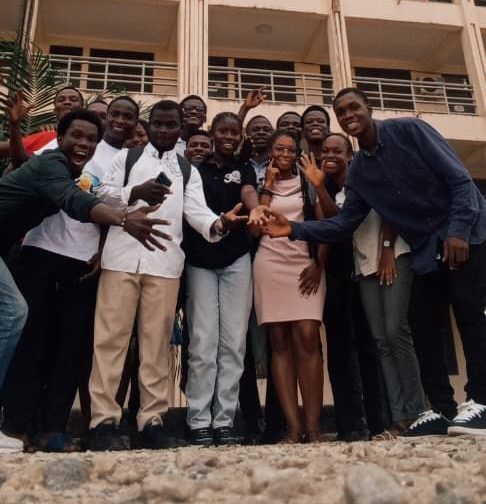
The first time I became aware of the very existence of the “State of the Map” event was, I think, around 2022.
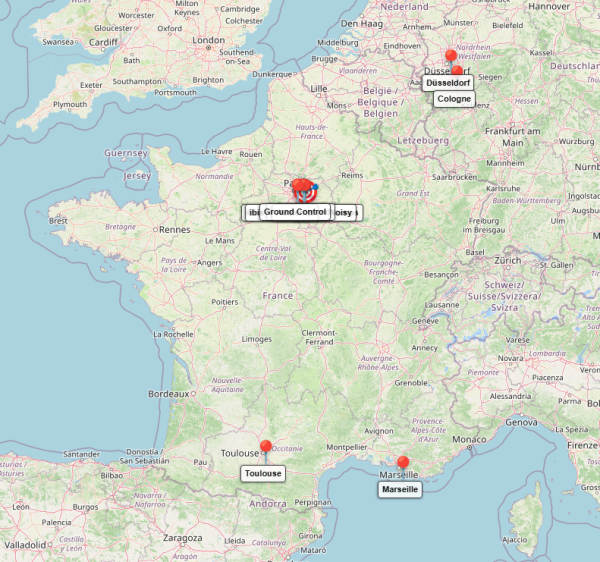
My first diary entry. Testing 123
My first diary entry.
Testing 123
My first diary entry.
Testing 123
on 25/8/26, we were a combination of bored enough and annoyed enough to start cleaning up the metadata of german railway stations, so as the track numbers actually appear in clients such as OpenRailwayMap (ORM) ((which we use regularly))
today we are going to formalize the process, also so that our commit history is less tedious to write
–
anything we do which is to further the purpose of creating a basic standard of german railway OSM cartography will be simply marked as “DMC - [bahnhofname]”
and further, in almost every case unless otherwise specified, our information comes from the database within Bahnhof.de supplied by the Deutsche Bahn, and our own knowledge from living within and travelling across germany
today we are going to formalize the process, also so that our commit history is less tedious to write
–
anything we do which is to further the purpose of creating a basic standard of german railway OSM cartography will be simply marked as “DMC - [bahnhofname]”
and further, in almost every case unless otherwise specified, our information comes from the database within Bahnhof.de supplied by the Deutsche Bahn, and our own knowledge from living within and travelling across germany
metadata cleanup across railways in Deutschland
on 25/8/26, we were a combination of bored enough and annoyed enough to start cleaning up the metadata of german railway stations, so as the track numbers actually appear in clients such as OpenRailwayMap (ORM) ((which we use regularly))OpenStreetMap
Well The North Side Is Done For Now. But Due For School, The Edet’s Will Be Slower.
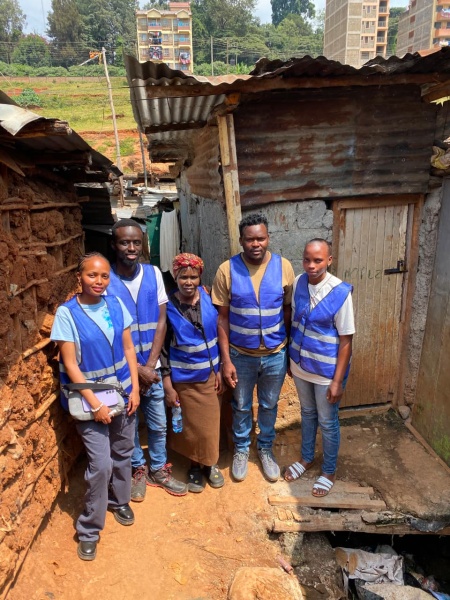
In June 2026, UN Mappers Kenya launched its first ever Youth Climate Mapping Externship ,a seven-week virtual programme designed to put real geospatial tools in the hands of young Kenyans and point them at real climate problems in Nairobi.
I have contributed several days but my contribution calendar has not been updated. I wonder what can I do about it?
This is a generated report — written by the same agentic (Claude Code) workflow that made the edits described below, summarizing what it did.
Over the past few days, I’ve mapped several major and minor roads; some recently opened to traffic, others set to open in the coming weeks.
There is a quiet satisfaction in laying down those initial traces, knowing that countless people will rely on that geometry for decades to come. OpenStreetMap has always been my favorite way to spend spare time: shaping a digital layer that creates tangible, real-world value. While mapping can sometimes feel like a solitary or thankless effort, seeing raw satellite imagery turn into living infrastructure that guides everyday movement makes it genuinely rewarding.
Mapping on OSM is always time well spent.
There is a quiet satisfaction in laying down those initial traces, knowing that countless people will rely on that geometry for decades to come. OpenStreetMap has always been my favorite way to spend spare time: shaping a digital layer that creates tangible, real-world value. While mapping can sometimes feel like a solitary or thankless effort, seeing raw satellite imagery turn into living infrastructure that guides everyday movement makes it genuinely rewarding.
Mapping on OSM is always time well spent.
Thanks to the work of several contributors, the usage of name:fur tag in OpenStreetMap is constantly increasing and there is now a pretty good coverage of Friuli region at place level (and even down to street-level in some parts of it).
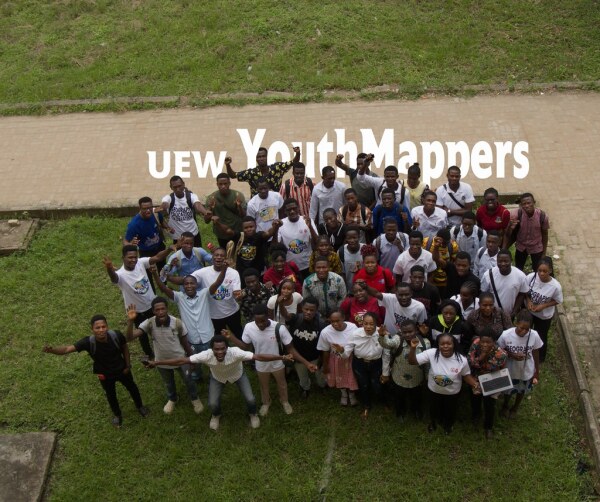
For some, it may mean learning how to create and contribute to OpenStreetMap but it goes beyond putting roads, buildings and places on a map.
My Google Summer of Code 2026 project was Category Support in Nominatim.
HonestDating #SoulMate #RealRelationship #Single #Love #LongTermRelationship #SeriousRelationship #Dating #Chatting #FindingLove #RealConnection #LooCan you guess why I’m so excited todaykingForLove #OnlineDating #TrueLove #TheOne #Trust #BigAss #BigBoobs #Tattoos
Can you guess why I’m so excited today?
OpenStreetMap is a map of the world, created by people like you and free to use under an open license.OpenStreetMap
I’ve just joined OpenStreetMap after using the CoMaps app for a month. I’ve been a frequent Google Maps Local Guide, but want to support open source efforts.
Today, I signed up and updated a shop that was labelled as disused to a cafe that recently opened local to me.
Today, I signed up and updated a shop that was labelled as disused to a cafe that recently opened local to me.
First entry and edit
Ive just joined OpenStreetMap after using the CoMaps app for a month. Ive been a frequent Google Maps Local Guide, but want to support open source efforts.OpenStreetMap
I need to vent for a minute.
Aligning aerial imagery terrifies me. I feel like no matter what I do, I will be off by a little bit. Whenever I come across a place where buildings are mapped and are a little bit off from the aerial imagery I’m using, I think to myself “I should probably align my imagery with those buildings,” but then I look at the primary road the buildings are right next to and realize that it is aligned with how my aerial imagery is right now. And then I see a cluster of features made 9+ years ago which is nowhere close to being aligned with my imagery and I question whether all of my contributions have been miles off of the correct location and if I’ve accidentally been vandalizing hundreds of places across Virginia without even knowing. But the worst feeling is when the same aerial imagery layer has its tiles slightly misaligned from the one right next to it, so I have to make the decision on which tile I should align all my changes with.
How can I achieve peace when it comes to aligning aerial imagery?
Aligning aerial imagery terrifies me. I feel like no matter what I do, I will be off by a little bit. Whenever I come across a place where buildings are mapped and are a little bit off from the aerial imagery I’m using, I think to myself “I should probably align my imagery with those buildings,” but then I look at the primary road the buildings are right next to and realize that it is aligned with how my aerial imagery is right now. And then I see a cluster of features made 9+ years ago which is nowhere close to being aligned with my imagery and I question whether all of my contributions have been miles off of the correct location and if I’ve accidentally been vandalizing hundreds of places across Virginia without even knowing. But the worst feeling is when the same aerial imagery layer has its tiles slightly misaligned from the one right next to it, so I have to make the decision on which tile I should align all my changes with.
How can I achieve peace when it comes to aligning aerial imagery?
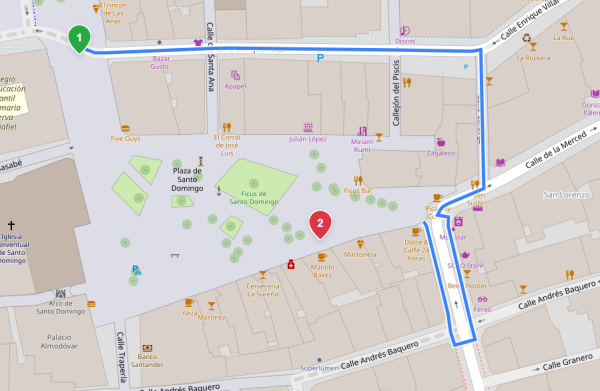
During this Google Summer of Code, Ive solved a very common problem that pedestrian routers have by adding the feature to route through open pedestrian areas, such as squares, plazas, pedestrian zones instead of routing around the perimeter.
Following the launch of the OSM Skeleton methodology (see this post, featured in weeklyOSM #836), I wanted to illustrate it with an example by resolving the main reports in an area of Senegal where the demo is currently being deployed.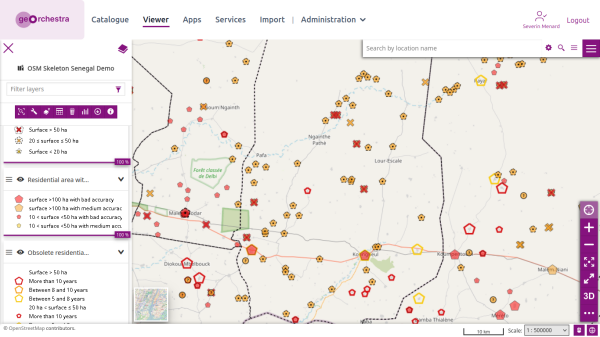
An example of a (small) territory mapped using the OSM Skeleton methodology
Following the launch of the OSM Skeleton methodology (see this post, featured in weeklyOSM #836), I wanted to illustrate it with an example by resolving the main reports in an area of Senegal where the demo is currently being deployed.OpenStreetMap
I keep getting questions about multilingual names in OpenStreetMap, so I want to state my position clearly in one place.
Thanks to a note suggested adding a Via Crucis station, I checked how similar routes in Switzerland are mapped in OpenStreetMap.
I remember when I first heard about these traffic cameras this guy paid me to listen to apb and manually log the codes to later look up and learn. Thinking about it these people were dangerous but it was normal for me being a military brat who joined the Marines after high school. I reminded the highest ranking ones of my grandfather who served 30 years. I guess it stirred up emotions making them uncomfortable cause I was clueless of my early departure resulting me in an unforseen path unaligned with my preset destiny.
This contribution is what Google identified as alpr I have a pic of it is just amazing how it doesn’t catch the license plate of a vehicle sitting in the middle of the intersection to prove truth of the occasion. Truth shall set us free
This contribution is what Google identified as alpr I have a pic of it is just amazing how it doesn’t catch the license plate of a vehicle sitting in the middle of the intersection to prove truth of the occasion. Truth shall set us free
Your life is only a see through I never wanted to be you my goal was to necessary to those who needed a new perspective to bring others from the darkness into the light to be abundant. While in the darkness no one tried to save me instead my heart was like a clothes line chopped up into millions of pieces. I answered to the calling of the darkness and won my right to be to be silent. I learned to dim my brightness to a dull roar to respect those imbedded in the deep roots. They know I veil from divine right always seemed to be an outcast. I fell in love with the people everyone of them are necessary. I can’t speak about a certainty to take place when the times right. I understand it’s necessary thanks for not making it scary. Realization of I’m crazy just like you I’ll be a very bitter taste to you. Don’t take something your not willing to part from.
Several weeks ago, my bicycle finally got fixed, after being abandoned in a broken state for a long time.
Using OpenStreetMap Data to Understand Digital Platform Locations
OpenStreetMap provides a collaborative source of geographic information created and maintained by contributors around the world. For developers and digital-project teams, mapping data can be useful when building location-aware websites and applications.
Why Mapping Data Matters
Location is an important part of many digital services. A platform may need to display cities, roads, landmarks, businesses, transportation routes, or other geographic information.
OpenStreetMap can help developers understand how geographic information can be represented and visualized.
Exploring a Location
When exploring an area with OpenStreetMap, users can examine different types of geographic features, including:
- Roads and streets
- Buildings
- Places and landmarks
- Public transportation
- Shops and businesses
- Parks and other geographic features
Mapping and Digital Projects
Location data can be useful for many types of projects, such as:
- Travel applications
- Local discovery tools
- Community mapping projects
- Delivery and logistics systems
- Emergency-response applications
- Educational mapping projects
- Location-based websites
Data Quality and Verification
One of the important lessons from collaborative mapping is that geographic data should be checked carefully before being used for a specific purpose.
Road names, addresses, business information, and other map features can change over time. Contributors can improve the map by documenting real-world information and correcting inaccuracies.
A Practical Mapping Workflow
A simple workflow for a digital mapping project can be:
- Identify the geographic area.
- Explore existing OpenStreetMap data.
- Check whether the required features are already mapped.
- Contribute corrections when appropriate and based on reliable observations.
- Use the available data according to its licensing requirements.
- Test the resulting map in the intended application.
Conclusion
OpenStreetMap demonstrates how community-created geographic data can support digital projects and help people understand places around them.
For developers, mapping is more than displaying a map on a webpage. It involves understanding geographic data, checking information quality, respecting licensing requirements, and creating useful experiences for users.
This diary entry is intended as a general technology and mapping discussion and is not an advertisement for a particular online service.