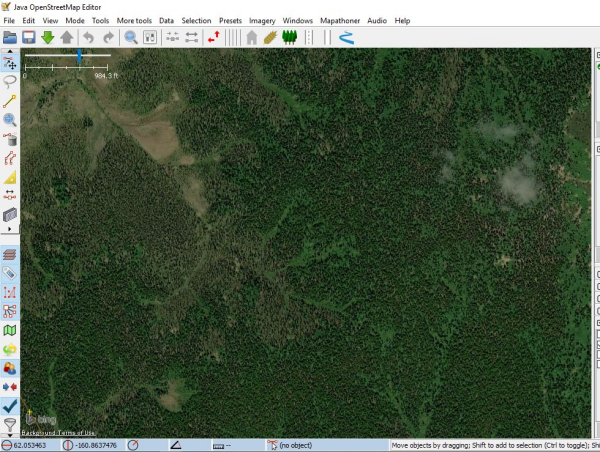
When I was using JOSM tonight, the satellite imagery shown on my screen reminded me of something.

Every Day Allowed morning 10:30 Am to Night 8:30 Pm every place will notify with address details updated no gmap unrequired because unique address Identity will require in osm map contact on WhatsApp or call +918332027008
My morning walks got replaced by Car driving lessons.
I turn on my GPS and go for driving and after returning I upload the traces to OSM.
I am wondering other than uploading the GPS traces, is there any other way I can utilize my local knowledge to contribute to OSM.
I turn on my GPS and go for driving and after returning I upload the traces to OSM.
I am wondering other than uploading the GPS traces, is there any other way I can utilize my local knowledge to contribute to OSM.
I’m honored to begin my journey as a 2025 Fellow with the Open Mapping Advocacy Network (OMAN) under the HOT Open Mapping Hub – West and Northern Africa (WNAH). Over the years, I have actively contributed to the open mapping ecosystem through OpenStreetMap Sierra Leone and YouthMappers, as a 2023 YouthMappers Leadership Summit Fellow and 2023–2024 YouthMappers Regional Ambassador for West Africa and a Trainer, OSM Sierra Leone. These experiences have shaped my passion for leveraging geospatial technology as a tool for sustainable development, data-driven decision-making, and youth empowerment.
I applied to join the OMA Fellowship because I deeply believe in the transformative power of open data and participatory mapping to promote inclusion, community actions, and resilience. The OMAN Learning Initiative provides a meaningful opportunity to expand my skills in course design, open mapping advocacy, and community engagement, while collaborating with my co-fellow to co-create impactful learning resources that empower local mappers and communities across West Africa. Together with my co-fellow Jimerveille Thierry-Ngouama, we’ll be co-developing the course “Open Mapping for City Management and Planning.” This learning initiative explores vital and practical themes such as: -Open Data for Sustainable Cities -Informal Settlement Mapping -Disaster Preparedness and Resilience -Disability Assessment and Accessibility Mapping -Revenue Generation and Urban Innovation These themes strongly resonate with challenges faced across West African cities, where limited access to reliable geospatial data often hinders effective governance and urban development. Open mapping offers a powerful and practical pathway to strengthen urban planning, disaster risk management, and inclusive infrastructure design ensuring that no community is left behind.
Open mapping matters to me because it gives people and places visibility and voice. It allows communities to document their realities, share their stories, and use data as a tool for advocacy and positive change. I have witnessed firsthand how collaborative mapping projects can bridge the gap between local governments, NGOs, and citizens, fostering trust and enabling more equitable and evidence-based decisions that improve lives. As an OMAN Fellow, I am truly excited to learn, collaborate, and contribute to advancing open mapping across Africa ,involving in initiatives that promote inclusive growth, sustainable cities, and empowered local voices through open data.
#OMANLearningInitiative #OpenData #YouthMappers #OpenStreetMap #WNAH #SierraLeone #CommunityEngagement #UrbanPlanning #SustainableCities
I applied to join the OMA Fellowship because I deeply believe in the transformative power of open data and participatory mapping to promote inclusion, community actions, and resilience. The OMAN Learning Initiative provides a meaningful opportunity to expand my skills in course design, open mapping advocacy, and community engagement, while collaborating with my co-fellow to co-create impactful learning resources that empower local mappers and communities across West Africa. Together with my co-fellow Jimerveille Thierry-Ngouama, we’ll be co-developing the course “Open Mapping for City Management and Planning.” This learning initiative explores vital and practical themes such as: -Open Data for Sustainable Cities -Informal Settlement Mapping -Disaster Preparedness and Resilience -Disability Assessment and Accessibility Mapping -Revenue Generation and Urban Innovation These themes strongly resonate with challenges faced across West African cities, where limited access to reliable geospatial data often hinders effective governance and urban development. Open mapping offers a powerful and practical pathway to strengthen urban planning, disaster risk management, and inclusive infrastructure design ensuring that no community is left behind.
Open mapping matters to me because it gives people and places visibility and voice. It allows communities to document their realities, share their stories, and use data as a tool for advocacy and positive change. I have witnessed firsthand how collaborative mapping projects can bridge the gap between local governments, NGOs, and citizens, fostering trust and enabling more equitable and evidence-based decisions that improve lives. As an OMAN Fellow, I am truly excited to learn, collaborate, and contribute to advancing open mapping across Africa ,involving in initiatives that promote inclusive growth, sustainable cities, and empowered local voices through open data.
OpenMapping #OMANFellowship #OMANFellows2025
#OMANLearningInitiative #OpenData #YouthMappers #OpenStreetMap #WNAH #SierraLeone #CommunityEngagement #UrbanPlanning #SustainableCities
About me
A geospatial tools and technologies enthusiast from the Republic of Congo. First, a chapter’s Vice-President of YouthMappers de l’Université DENIS SASSOU-N’GUESSO, before serving as a Technical YouthMappers Regional Ambassador. Now, more than pleased to shape the future of Open Mapping within the North and West African region as a Content and Community Engagement Fellow at the HOT WNA Open Mapping Hub.
How did I end up here?
Having witnessed the power of Open Mapping, I am dedicated to raising awareness around it and its related tools and technologies. So, when I heard about the Open Mapping Advocacy Network (OMAN) Learning Initiative, I felt excited to dive into it. More interestingly, the selection process to become a fellow in this program was one of the best experiences I have had. Indeed, no interview for shortlisted, the selection team directly provides us task to complete, linked to what is expected of us and what we are supposed to be doing once selected. This process taught me a great deal about situational thinking and problem-solving.
According to my view, why is open mapping so important?
Open mapping is neither just about freely available online maps for getting from place A to B nor collaborative mapping projects anyone can join. It’s really about democratizing locational knowledge for facilitating decision making, helping problem solving, and supporting one’s geographic experience. The reason why the course under development is titled “Open mapping for sustainable cities” and will be subdivided into five (05) modules, emphasizing an introduction and four (04) mapping thematic as follows: informal settlements, disaster management, disability assessments, and revenue generation.
Starting my fellowship at WNA HUB
A geospatial tools and technologies enthusiast from the Republic of Congo. First, a chapters Vice-President of YouthMappers de lUniversité DENIS SASSOU-NGUESSO, before serving as a Technical YouthMappers Regional Ambassador.OpenStreetMap
this is just a little page for me to keep some of my Ultra experiments, will write more when time allows
I had the incredible opportunity to represent Vriddhi Project – UNOPS Sri Lanka at the State of the Map 2025 Conference, where I presented a talk on “Mapping for Impact: Introducing Open Mapping to Civil Society in Sri Lanka.”
During this session, I shared how Vriddhi Project empowers civil society organizations (CSOs) across Sri Lanka to harness data and geospatial technologies for better advocacy, planning, and community engagement. Civil society often faces challenges in visualizing, analyzing, and applying data effectively. Geospatial tools allow CSOs to map resources, identify gaps, track progress, and communicate evidence-based solutions, amplifying their impact at the grassroots level.
The session resonated strongly with the audience because it highlighted real-life applications, measurable results, and the transformative power of open mapping. Participants were inspired to see how geospatial tools can turn abstract data into actionable insights that drive social change.
Thanks to State Of The Map and Open Mapping Hub - Asia Pacific for creating opportunities
During this session, I shared how Vriddhi Project empowers civil society organizations (CSOs) across Sri Lanka to harness data and geospatial technologies for better advocacy, planning, and community engagement. Civil society often faces challenges in visualizing, analyzing, and applying data effectively. Geospatial tools allow CSOs to map resources, identify gaps, track progress, and communicate evidence-based solutions, amplifying their impact at the grassroots level.
The session resonated strongly with the audience because it highlighted real-life applications, measurable results, and the transformative power of open mapping. Participants were inspired to see how geospatial tools can turn abstract data into actionable insights that drive social change.
Thanks to State Of The Map and Open Mapping Hub - Asia Pacific for creating opportunities

I had the incredible opportunity to represent Vriddhi Project – UNOPS Sri Lanka at the State of the Map 2025, held in Manila, Philippines from October 3rd to 5th, 2025.
As part of this global gathering of open mapping enthusiasts, I conducted a hands-on workshop titled “Getting Started with QGIS: Beginner’s Guide to Mapping with Open Source Tools.” The session introduced participants to the exciting world of open geospatial technology and its potential to create positive impact at community level.
During the workshop, we explored: - OpenStreetMap (OSM) and the HOT Tasking Manager for collaborative and humanitarian mapping. - Open data sources such as Planet OSM, Geofabrik, BBBike, and Overpass Turbo. - How to select the right data type, perform data cleaning, and integrate datasets into QGIS effectively. - Practical mapping exercises that turned open data into meaningful stories and insights.
The energy in the room was inspiring — participants from different backgrounds came together to learn, question, and create. The conversations around open data, inclusivity, and sustainable development reaffirmed my belief that maps are more than visuals — they’re bridges that connect people, places, and purpose.
Heartfelt thanks to the State Of The Map 2025 organizers, Open Mapping Hub - Asia Pacific and the passionate mapping community for this enriching experience!
As part of this global gathering of open mapping enthusiasts, I conducted a hands-on workshop titled “Getting Started with QGIS: Beginner’s Guide to Mapping with Open Source Tools.” The session introduced participants to the exciting world of open geospatial technology and its potential to create positive impact at community level.
During the workshop, we explored: - OpenStreetMap (OSM) and the HOT Tasking Manager for collaborative and humanitarian mapping. - Open data sources such as Planet OSM, Geofabrik, BBBike, and Overpass Turbo. - How to select the right data type, perform data cleaning, and integrate datasets into QGIS effectively. - Practical mapping exercises that turned open data into meaningful stories and insights.
The energy in the room was inspiring — participants from different backgrounds came together to learn, question, and create. The conversations around open data, inclusivity, and sustainable development reaffirmed my belief that maps are more than visuals — they’re bridges that connect people, places, and purpose.
Heartfelt thanks to the State Of The Map 2025 organizers, Open Mapping Hub - Asia Pacific and the passionate mapping community for this enriching experience!

A few days ago I found what appears to be a criminaly underviewed video (currently with 81 views) about imagery interpretation. I almost cannot believe I hadnt seen it up untill now.

If you are like me, you like things fast. Hobbits aren’t know for this, but we Mappins a little different you know…. more to come.


Mapped a new bit of The Meadoway this morning. Its not quite open yet so there are construction gates (TIL theyre called barrier=hampshire_gate). I will have to remember to remove them when the trail opens (December, they say).

We (Teritorio.fr) publish an approach and an implementation of a strategy to reconstruct OpenStreetMap object history at a semantic et geospatial level, beyond the technical object history.

When processing places of worship for the National Crisis Center (Belgium), I run into the problem that its quite hard to filter just significant places of worship from OSM.

Some people are confused about neis-one Type? badge below Discussed changesets section. So what Its actualy mean?

I had the incredible opportunity to represent Vriddhi Project – UNOPS Sri Lanka at the State of the Map 2025 Conference, where I presented a talk on “Mapping for Impact: Introducing Open Mapping to Civil Society in Sri Lanka.”
During this session, I shared how Vriddhi Project empowers civil society organizations (CSOs) across Sri Lanka to harness data and geospatial technologies for better advocacy, planning, and community engagement. Civil society often faces challenges in visualizing, analyzing, and applying data effectively. Geospatial tools allow CSOs to map resources, identify gaps, track progress, and communicate evidence-based solutions, amplifying their impact at the grassroots level.
The session resonated strongly with the audience because it highlighted real-life applications, measurable results, and the transformative power of open mapping. Participants were inspired to see how geospatial tools can turn abstract data into actionable insights that drive social change.
Thanks to State Of The Map and Open Mapping Hub - Asia Pacific for creating opportunities
During this session, I shared how Vriddhi Project empowers civil society organizations (CSOs) across Sri Lanka to harness data and geospatial technologies for better advocacy, planning, and community engagement. Civil society often faces challenges in visualizing, analyzing, and applying data effectively. Geospatial tools allow CSOs to map resources, identify gaps, track progress, and communicate evidence-based solutions, amplifying their impact at the grassroots level.
The session resonated strongly with the audience because it highlighted real-life applications, measurable results, and the transformative power of open mapping. Participants were inspired to see how geospatial tools can turn abstract data into actionable insights that drive social change.
Thanks to State Of The Map and Open Mapping Hub - Asia Pacific for creating opportunities

I had the incredible opportunity to represent Vriddhi Project – UNOPS Sri Lanka at the State of the Map 2025, held in Manila, Philippines from October 3rd to 5th, 2025.
As part of this global gathering of open mapping enthusiasts, I conducted a hands-on workshop titled “Getting Started with QGIS: Beginner’s Guide to Mapping with Open Source Tools.” The session introduced participants to the exciting world of open geospatial technology and its potential to create positive impact at community level.
During the workshop, we explored: - OpenStreetMap (OSM) and the HOT Tasking Manager for collaborative and humanitarian mapping. - Open data sources such as Planet OSM, Geofabrik, BBBike, and Overpass Turbo. - How to select the right data type, perform data cleaning, and integrate datasets into QGIS effectively. - Practical mapping exercises that turned open data into meaningful stories and insights.
The energy in the room was inspiring — participants from different backgrounds came together to learn, question, and create. The conversations around open data, inclusivity, and sustainable development reaffirmed my belief that maps are more than visuals — they’re bridges that connect people, places, and purpose.
Heartfelt thanks to the State Of The Map 2025 organizers, Open Mapping Hub - Asia Pacific and the passionate mapping community for this enriching experience!
As part of this global gathering of open mapping enthusiasts, I conducted a hands-on workshop titled “Getting Started with QGIS: Beginner’s Guide to Mapping with Open Source Tools.” The session introduced participants to the exciting world of open geospatial technology and its potential to create positive impact at community level.
During the workshop, we explored: - OpenStreetMap (OSM) and the HOT Tasking Manager for collaborative and humanitarian mapping. - Open data sources such as Planet OSM, Geofabrik, BBBike, and Overpass Turbo. - How to select the right data type, perform data cleaning, and integrate datasets into QGIS effectively. - Practical mapping exercises that turned open data into meaningful stories and insights.
The energy in the room was inspiring — participants from different backgrounds came together to learn, question, and create. The conversations around open data, inclusivity, and sustainable development reaffirmed my belief that maps are more than visuals — they’re bridges that connect people, places, and purpose.
Heartfelt thanks to the State Of The Map 2025 organizers, Open Mapping Hub - Asia Pacific and the passionate mapping community for this enriching experience!

Im writing my first OSM Diary entry in hopes that some local Thunder Bay, ON or Northwestern Ontario mapper(s) will find me here.

Bali, Indonesia’s “Island of the Gods,” is celebrated for its natural beauty and spiritual heritage, yet faces a complex array of disaster risks shaped by tectonic activity, climate variability, and human development.

The vector tiles here have always had names in the local language, so Welsh-speaking parts of Wales have Welsh names shown and English-speaking parts English names:


Im excited to share PowerShell.Map - a new module that brings interactive OpenStreetMap visualization to the PowerShell command line!

I am very happy to tell you about the initiative that was coordinated by me and promoted by my company, IVIDES DATA™.

I am very happy to observe and participate in a trend that, since 2024 in Belém (Brazil), has been moving forward: a very positive streak in the OSM Latam community —the community where I am most active— around people who have managed to mobilize mor…


We released version 11.0 of the GraphHopper routing engine.

I am so excited to have Unique Mappers RSU chapter virtual event taking off today for the next 3 days. I am also excited to have Favour and Adanna anchoring this event as part fo their internship program task
Prof .P Ede of Geography Dept and Dr . Erefama of Geology was in attendance along with so many others .
Cheers to Unique Mappers Nigeria
Prof .P Ede of Geography Dept and Dr . Erefama of Geology was in attendance along with so many others .
Cheers to Unique Mappers Nigeria
Unique Mappers (River State University)RSU takes off with Newbies Orientation and Mapathon Training Anchored by Unique Mappers Interns
I am so excited to have Unique Mappers RSU chapter virtual event taking off today for the next 3 days. I am also excited to have Favour and Adanna anchoring this event as part fo their internship program taskOpenStreetMap

We’re excited to announce the official launch of our OSM editor.

Its been a week since the State of the Map (SOTM) 2025 and this edition of State of the Map actually had a lot of firsts, its the first to be held in Asia and it was actually the first that Im attending.

I am currently trying to properly import bus stops data into OSM (see here for the details). I did tests upload on the dev server, but I didnt find a way to revert a changeset : the osm-revert-scripts can get a changeset content, and seems to generat…

The State of the Map (SOTM) conference in Nairobi gave me a great opportunity and motivation. From that experience, I realized that even a small contribution can create a huge impact.

I like to enable creating Notes in a MapLibre map. This should be possible both anonymously and while logged in. The following documents the learning steps using plain vanilla JavaScript. Improvements or feedback welcome.


There is a strange site in Thomastown, Co. Kilkenny where you have a circular stone and several iron hoops in the ground, and Ive often wondered what it is, and presumed it had something to do with tying up horses.

In Leaflet, I really enjoy using Leaflet.Control.Layers.Tree and find its possibilities amazing. That’s why I’ve named the control I describe here Layertree.
About a week ago, I was thinking about the height of the buildings of my campus from above, especially in relation to the relatively flat terrain and skyline around Daytona Beach.
Discreet Trustworthy keep to myself Will help Unload in your cab or at mine
Discreet Trustworthy keep to myself Will help Unload in your cab or at mine
Discreet Trustworthy keep to myself Will help Unload in your cab or at mine
