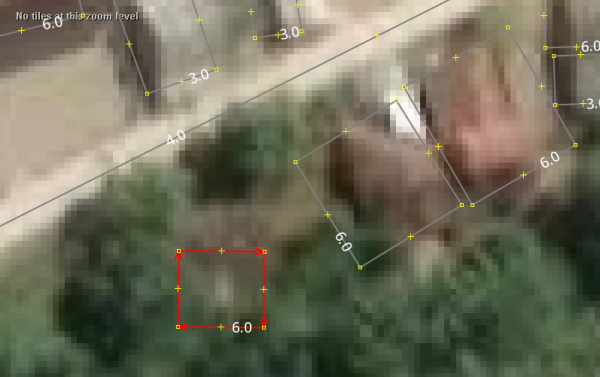
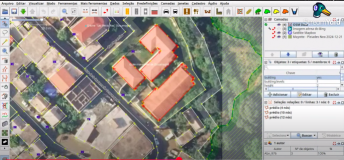
In the Halton region in Ontario Canada (and probably elsewhere), many two-way streets split with a boulevard are modelled as two one-way street segments (eg Way 286996210).

Hi everyone,
I’m Paula Villar, from Paraguay with a degree in architecture from the National University of Asunción. I completed my final graduation project as an internship at the Research, Development, and Innovation Center (CIDi) of FADA-UNA, where I participated in open mapping projects, territorial analysis, and the production of geospatial data. I also served as president of YouthMappers UNA (2022–2025), promoting student engagement in collaborative mapping activities.
What does HOT mean to me? HOT represents a community that brings open mapping and geospatial data closer to the people who need them to make informed decisions about their territories. Through projects like Atlas Urbano Paraguay (AUPy) and YouthMappers activities, I’ve seen how collaborative tools and open data help make underrepresented urban and rural realities visible.
I particularly value the spirit of collective work and the opportunity to contribute from different disciplines while learning and sharing with people from diverse backgrounds. Beyond technology, HOT provides a network of support and learning that strengthens territorial management, planning, and responses to local challenges.
How did I get involved in HOT? My introduction to HOT came through my involvement with YouthMappers UNA, where I led mapping activities with students from various fields. That experience, along with my graduation project at CIDi, allowed me to contribute to initiatives like AUPy and other efforts within the YouthMappers network, where open mapping played a central role.
During the internship, I engaged in the production of cartography and territorial analysis for municipalities in both national and cross-border contexts (with Brazil), applying open mapping methodologies and free and open source tools. I coordinated field-mapping campaigns, ran mapping workshops and urban characterizations, and integrated data on buildings, vegetation, and bodies of water.
Additional work included developing thematic maps and platforms for data visualization and download, prioritizing accessible, low-cost tools. I also led project outreach and trained volunteers in using OSM, JOSM, and Mapillary.
Through an institutional agreement between CIDi and KU Leuven (Catholic University of Leuven, Belgium), I supported master’s students in joint activities and academic-technical exchanges. In 2024, I was selected for the YouthMappers Leadership Fellowship in Thailand, where I further strengthened my open mapping and leadership skills.
These experiences have deepened my understanding of the value of open mapping, the importance of interdisciplinary collaboration, and the need to strengthen local and regional capacities.
Why do I want to become a voting member? I hope to bring a practical perspective grounded in the reality of those working with open data in contexts similar to Paraguay. Along this journey, I’ve witnessed how important it is for HOT’s decisions to reflect the real challenges faced by local teams. My goal is to help ensure that the community remains inclusive and that both technical and collaborative efforts translate into useful tools for people managing, planning, or simply trying to better understand their environment.
Main responsibility as a voting member HOT’s strategic decisions must prioritize the practical use and long-term sustainability of open data, ensuring that they remain effective tools for urban management and risk reduction in vulnerable communities.
It is of my interest to contribute to the Community and Training Working Groups, where I can share my experience in technical training, participatory methodologies, and the application of open data in urban and territorial projects.
HOT’s challenge and my contribution One of HOT’s key challenges is ensuring that the open data it generates remains useful and up to date for local teams and decision-makers. From my experience as both architect and mapper, I see three concrete ways to contribute:
Supporting the integration of data into local management: Helping ensure that open mapping outputs are clear and usable for municipal or community-level projects—particularly through basic geospatial analysis and straightforward technical guidance. Facilitating initial technical training: Organizing and supporting workshops, mapathons, and hands-on activities for local teams and new volunteers learning to use tools like OpenStreetMap, QGIS, or web-based map viewers. Documenting accessible workflows: Creating guides and step-by-step documentation for data management and publishing processes, enabling other teams to replicate and adapt them—even without prior experience.
My focus is on ensuring that the information we produce doesn’t get lost, but instead remains available and meaningful for those who need it—empowering others to adopt and apply it in their own contexts.
Thank you for your consideration, Kind regards,
Paula Villar Arch. Paula Villar Duré YouthMappers Volunteer Regional Ambassador | America Faculty of Architecture, Design, and Art | National University of Asunción
I’m Paula Villar, from Paraguay with a degree in architecture from the National University of Asunción. I completed my final graduation project as an internship at the Research, Development, and Innovation Center (CIDi) of FADA-UNA, where I participated in open mapping projects, territorial analysis, and the production of geospatial data. I also served as president of YouthMappers UNA (2022–2025), promoting student engagement in collaborative mapping activities.
What does HOT mean to me? HOT represents a community that brings open mapping and geospatial data closer to the people who need them to make informed decisions about their territories. Through projects like Atlas Urbano Paraguay (AUPy) and YouthMappers activities, I’ve seen how collaborative tools and open data help make underrepresented urban and rural realities visible.
I particularly value the spirit of collective work and the opportunity to contribute from different disciplines while learning and sharing with people from diverse backgrounds. Beyond technology, HOT provides a network of support and learning that strengthens territorial management, planning, and responses to local challenges.
How did I get involved in HOT? My introduction to HOT came through my involvement with YouthMappers UNA, where I led mapping activities with students from various fields. That experience, along with my graduation project at CIDi, allowed me to contribute to initiatives like AUPy and other efforts within the YouthMappers network, where open mapping played a central role.
During the internship, I engaged in the production of cartography and territorial analysis for municipalities in both national and cross-border contexts (with Brazil), applying open mapping methodologies and free and open source tools. I coordinated field-mapping campaigns, ran mapping workshops and urban characterizations, and integrated data on buildings, vegetation, and bodies of water.
Additional work included developing thematic maps and platforms for data visualization and download, prioritizing accessible, low-cost tools. I also led project outreach and trained volunteers in using OSM, JOSM, and Mapillary.
Through an institutional agreement between CIDi and KU Leuven (Catholic University of Leuven, Belgium), I supported master’s students in joint activities and academic-technical exchanges. In 2024, I was selected for the YouthMappers Leadership Fellowship in Thailand, where I further strengthened my open mapping and leadership skills.
These experiences have deepened my understanding of the value of open mapping, the importance of interdisciplinary collaboration, and the need to strengthen local and regional capacities.
Why do I want to become a voting member? I hope to bring a practical perspective grounded in the reality of those working with open data in contexts similar to Paraguay. Along this journey, I’ve witnessed how important it is for HOT’s decisions to reflect the real challenges faced by local teams. My goal is to help ensure that the community remains inclusive and that both technical and collaborative efforts translate into useful tools for people managing, planning, or simply trying to better understand their environment.
Main responsibility as a voting member HOT’s strategic decisions must prioritize the practical use and long-term sustainability of open data, ensuring that they remain effective tools for urban management and risk reduction in vulnerable communities.
It is of my interest to contribute to the Community and Training Working Groups, where I can share my experience in technical training, participatory methodologies, and the application of open data in urban and territorial projects.
HOT’s challenge and my contribution One of HOT’s key challenges is ensuring that the open data it generates remains useful and up to date for local teams and decision-makers. From my experience as both architect and mapper, I see three concrete ways to contribute:
Supporting the integration of data into local management: Helping ensure that open mapping outputs are clear and usable for municipal or community-level projects—particularly through basic geospatial analysis and straightforward technical guidance. Facilitating initial technical training: Organizing and supporting workshops, mapathons, and hands-on activities for local teams and new volunteers learning to use tools like OpenStreetMap, QGIS, or web-based map viewers. Documenting accessible workflows: Creating guides and step-by-step documentation for data management and publishing processes, enabling other teams to replicate and adapt them—even without prior experience.
My focus is on ensuring that the information we produce doesn’t get lost, but instead remains available and meaningful for those who need it—empowering others to adopt and apply it in their own contexts.
Thank you for your consideration, Kind regards,
Paula Villar Arch. Paula Villar Duré YouthMappers Volunteer Regional Ambassador | America Faculty of Architecture, Design, and Art | National University of Asunción
Hello HOT Membership.
I’m Priscovia Ng’ambi, a passionate OSM Mapper from Zambia, Southern Africa. I’m more than honored to be shortlisted as a 2025 voting member. As a core founder of Local Knowledge Mappers, I serve as Head of Communications and actively contribute to OpenStreetMap as a validator, trainer, and mapper. I also lead the communication for Local knowledge Mappers, a very active open mapping organization in Zambia.
How did you become involved in HOT?
My journey with HOT began in 2020 as a YouthMappers , and at the same time a friend invited me to a mapathon. The very first HOT event I joined, sparked my interest in continue doing my Mapping on TaskManager, it also opened doors to a community that shares my passion for using geospatial technology to drive positive change.
Since then, I have been actively involved in various HOT projects such as disaster Mapping across the global and other events. I’m excited about the opportunity to contribute to the organization’s growth and impact indirectly and directly through mapping.
Coud you tell us about your involvement in HOT, Mapping and/ or Humanitarian response?
As a core founder of Local Knowledge Mappers, I have been very active in promoting OpenStreetMap and geospatial technology in my community. I’ve contributed to various mapping projects, validated data, and trained others on mapping techniques. Through HOT, I have had the opportunity to collaborate with diverse individuals and organizations, working together to create maps that support humanitarian response and sustainable development this is by contributing to mapping on TaskManager, then later on edits created are downloaded to create maps amidst of COVID-19, wars, earthquakes, cyclone etc.
What does HOT mean to you?
HOT is more than just a mapping platform, more than ideas of certain group of people, its a vibrant community that connects me with like minded individuals who share my passion for using technology to drive positive change. Through HOT, I have discovered my calling to serve communities and make a meaningful impact on the world especially places I can not reach or help with money. HOT is a community that emphasis on inclusivity, collaboration, and innovation which resonates deeply with me, and I’m excited about the opportunity to contribute to its growth and success.
Why do you want to be a voting member?
As a voting member who is a female, I want to represent the voices of underrepresented communities, particularly in Africa, and advocate for inclusivity in the geospatial field. I believe that everyone, regardless of their educational background or status, should have access to geospatial technology and opportunities to contribute to mapping projects. I’m passionate about creating a more inclusive and diverse community that reflects the needs and perspectives of people from all walks of life, especially being a female.
As a voting member of HOT , what do you see as your most important responsibility?
As a voting member, my key responsibilities would include representing underrepresented communities, promoting equality, and driving HOT vision in a long term. I would much focus on ensuring that HOT’s leadership is accountable to the community, and that our decisions reflect the needs and view of our diverse membership. Placing a priority on initiatives that promote inclusivity, capacity building, community engagement, and work to create opportunities for mappers to grow and develop their skills, which will also make them self sustainable.
How do you plan to be involved in HOT as a voting member? Are you there any working groups you would be interested to join?
I would like to be actively involved in working groups that prioritize community engagement, inclusivity, and capacity building especially the Governance working group.
I would like also to collaborate with HOT leaders and members to drive growth and impact, and to contribute to initiatives that promote diversity and inclusion. My passion to communicate with right information to the right people in me shouldn’t end in my local knowledge Mappers only, I will also join the communication working Group to ensure people are informed at the right time.
What do you see as HOT greatest challenge, and how do you plan to help HOT meet that challenge?
I see HOT’s greatest challenge as sustaining community engagement and proactivity without consistent funding. When financial support is scarce, communities can go dormant due to limited access to skills, knowledge, and resources. To address this, I would like to help HOT shift its approach to be more community driven, empowering local individuals and organizations to take ownership of mapping initiatives and drive the HOT agenda at the grassroots level. By doing so, we can ensure that HOT’s services are tailored to meet the specific needs of local communities, rather than being dictated by remote stakeholders. This community-led approach would not only foster sustainability but also amplify the impact of HOT’s work, making it more responsive, inclusive, and effective in driving positive change.
Thank you
Priscovia Ng’ambi ( Female OSM mapper)
Looking forward to your voting.
I’m Priscovia Ng’ambi, a passionate OSM Mapper from Zambia, Southern Africa. I’m more than honored to be shortlisted as a 2025 voting member. As a core founder of Local Knowledge Mappers, I serve as Head of Communications and actively contribute to OpenStreetMap as a validator, trainer, and mapper. I also lead the communication for Local knowledge Mappers, a very active open mapping organization in Zambia.
How did you become involved in HOT?
My journey with HOT began in 2020 as a YouthMappers , and at the same time a friend invited me to a mapathon. The very first HOT event I joined, sparked my interest in continue doing my Mapping on TaskManager, it also opened doors to a community that shares my passion for using geospatial technology to drive positive change.
Since then, I have been actively involved in various HOT projects such as disaster Mapping across the global and other events. I’m excited about the opportunity to contribute to the organization’s growth and impact indirectly and directly through mapping.
Coud you tell us about your involvement in HOT, Mapping and/ or Humanitarian response?
As a core founder of Local Knowledge Mappers, I have been very active in promoting OpenStreetMap and geospatial technology in my community. I’ve contributed to various mapping projects, validated data, and trained others on mapping techniques. Through HOT, I have had the opportunity to collaborate with diverse individuals and organizations, working together to create maps that support humanitarian response and sustainable development this is by contributing to mapping on TaskManager, then later on edits created are downloaded to create maps amidst of COVID-19, wars, earthquakes, cyclone etc.
What does HOT mean to you?
HOT is more than just a mapping platform, more than ideas of certain group of people, its a vibrant community that connects me with like minded individuals who share my passion for using technology to drive positive change. Through HOT, I have discovered my calling to serve communities and make a meaningful impact on the world especially places I can not reach or help with money. HOT is a community that emphasis on inclusivity, collaboration, and innovation which resonates deeply with me, and I’m excited about the opportunity to contribute to its growth and success.
Why do you want to be a voting member?
As a voting member who is a female, I want to represent the voices of underrepresented communities, particularly in Africa, and advocate for inclusivity in the geospatial field. I believe that everyone, regardless of their educational background or status, should have access to geospatial technology and opportunities to contribute to mapping projects. I’m passionate about creating a more inclusive and diverse community that reflects the needs and perspectives of people from all walks of life, especially being a female.
As a voting member of HOT , what do you see as your most important responsibility?
As a voting member, my key responsibilities would include representing underrepresented communities, promoting equality, and driving HOT vision in a long term. I would much focus on ensuring that HOT’s leadership is accountable to the community, and that our decisions reflect the needs and view of our diverse membership. Placing a priority on initiatives that promote inclusivity, capacity building, community engagement, and work to create opportunities for mappers to grow and develop their skills, which will also make them self sustainable.
How do you plan to be involved in HOT as a voting member? Are you there any working groups you would be interested to join?
I would like to be actively involved in working groups that prioritize community engagement, inclusivity, and capacity building especially the Governance working group.
I would like also to collaborate with HOT leaders and members to drive growth and impact, and to contribute to initiatives that promote diversity and inclusion. My passion to communicate with right information to the right people in me shouldn’t end in my local knowledge Mappers only, I will also join the communication working Group to ensure people are informed at the right time.
What do you see as HOT greatest challenge, and how do you plan to help HOT meet that challenge?
I see HOT’s greatest challenge as sustaining community engagement and proactivity without consistent funding. When financial support is scarce, communities can go dormant due to limited access to skills, knowledge, and resources. To address this, I would like to help HOT shift its approach to be more community driven, empowering local individuals and organizations to take ownership of mapping initiatives and drive the HOT agenda at the grassroots level. By doing so, we can ensure that HOT’s services are tailored to meet the specific needs of local communities, rather than being dictated by remote stakeholders. This community-led approach would not only foster sustainability but also amplify the impact of HOT’s work, making it more responsive, inclusive, and effective in driving positive change.
Thank you
Priscovia Ng’ambi ( Female OSM mapper)
Looking forward to your voting.
Hello, I have completed work in the stilon area of Wilson. I have already moved on and made significant progress in improving Teton Pines, both the golf course and residential areas. I will provide another update once I complete work in this area!
Many people around the world will have heard about the serious power outage that Spain and Portugal had a few weeks ago, as the power grid for almost the whole of the two countries failed for the best part of the day.
NOTE: I am in the DeFlock discord server.
If you see any issues on Flock cameras or similar, or would like a second set of eyes in the Greater Gadsden area, ping me (Im <@997714796537450597>) in the server, or contact me on any of my available platfo…
If you see any issues on Flock cameras or similar, or would like a second set of eyes in the Greater Gadsden area, ping me (Im <@997714796537450597>) in the server, or contact me on any of my available platfo…
On April 26 and 27, I had the opportunity to share my experiences with YouthMappers Universitas Negeri Jakarta (UNJ) about how to contribute to the Mapillary platform.
Recently, someone asked me to create a custom MapCSS style for JOSM that visually indicates how “fresh” OSM objects are—essentially, a way to distinguish recently updated or created objects from older ones at a glance.
I’ve recently been taking on more tagging for wheelchair accessibility in my neighbourhood. It’s been one of those “you don’t see it until you think to look for it” kinds of things. I’m not disabled myself, so I never thought to consider the heights of steps (until I tripped on them.) Now that I look for them, I must freak out other people around me as they see me stare at my foot to see whether a step is ankle high or not.
There were a couple things I came to think about while mapping that I could not seem to find answers for in the wiki. A lot of the time, I just answer the question with the framework of “I’ve seen places do these things, so I will treat them as the standard and anything that falls under that bar is limited or not accessible.” I would be curious for others thoughts on them.
While common, they are not ubiquitous. In my mapping practice, if a place does not have at least one powered door, I label it as limited wheelchair accessibility at maximum. My logic is that even if a door could be physically be opened manually by a patron in a wheelchair (as in, they can open the door and have enough space on the platform outside to maneuver while doing it – I have seen places where the platform is elevated and small enough that you would fall off trying to do so), they shouldn’t have to do that while the option of powered doors exists.
There are also problems where these exterior doors use door closers as a fire prevention feature – but those closers are set up improperly and close too fast. So if you’re trying to open a door manually while trying to enter with a wheelchair, you have a door slamming into you and pushing you into the frame (which I have seen happen a few times.)
For the longest time, I assumed there would be an elevator or some way you could access the second level in a wheelchair. But after actively looking, I couldn’t find one. Technically, there are pedways leading into the mall from other buildings and those buildings have elevators. But I feel like “to get to the second level, exit the building and enter through another building after using their elevator” is not a reasonable accessibility plan.
Still though, the stores themselves on the second level are accessible. So do we label them accessible because the features are accessible, or do we label them unaccessible because there is no reasonable way for a wheelchair user to get to them?
My take has been that they are not accessible, even if the stores themselves are. If someone in a wheelchair entered the mall and saw a map that showed the stores as accessible, then they would assume that they could actually access them. If they learned that they are accessible after they leave the building and get back inside through a maze, I would say it is reasonable for them to feel like they got lied to. It is not useful information to say “after you manage to find a way in there, you’ll have an easy time of shopping inside.”
There were a couple things I came to think about while mapping that I could not seem to find answers for in the wiki. A lot of the time, I just answer the question with the framework of “I’ve seen places do these things, so I will treat them as the standard and anything that falls under that bar is limited or not accessible.” I would be curious for others thoughts on them.
- Do establishments need powered doors to be accessible?
While common, they are not ubiquitous. In my mapping practice, if a place does not have at least one powered door, I label it as limited wheelchair accessibility at maximum. My logic is that even if a door could be physically be opened manually by a patron in a wheelchair (as in, they can open the door and have enough space on the platform outside to maneuver while doing it – I have seen places where the platform is elevated and small enough that you would fall off trying to do so), they shouldn’t have to do that while the option of powered doors exists.
There are also problems where these exterior doors use door closers as a fire prevention feature – but those closers are set up improperly and close too fast. So if you’re trying to open a door manually while trying to enter with a wheelchair, you have a door slamming into you and pushing you into the frame (which I have seen happen a few times.)
- Do we evaluate accessibility at the POI feature level, or in context?
For the longest time, I assumed there would be an elevator or some way you could access the second level in a wheelchair. But after actively looking, I couldn’t find one. Technically, there are pedways leading into the mall from other buildings and those buildings have elevators. But I feel like “to get to the second level, exit the building and enter through another building after using their elevator” is not a reasonable accessibility plan.
Still though, the stores themselves on the second level are accessible. So do we label them accessible because the features are accessible, or do we label them unaccessible because there is no reasonable way for a wheelchair user to get to them?
My take has been that they are not accessible, even if the stores themselves are. If someone in a wheelchair entered the mall and saw a map that showed the stores as accessible, then they would assume that they could actually access them. If they learned that they are accessible after they leave the building and get back inside through a maze, I would say it is reasonable for them to feel like they got lied to. It is not useful information to say “after you manage to find a way in there, you’ll have an easy time of shopping inside.”
Wheelchair Accessibility Mapping in Regina - Some Thoughts
Ive recently been taking on more tagging for wheelchair accessibility in my neighbourhood. Its been one of those you dont see it until you think to look for it kinds of things.OpenStreetMap
The full knowledge boy from Wakisi Dekabusa. He ended in Primary Seven at Sofraa Primary School. No College But Full Knowledge Capacity Boy. He Started Hustling In 2013 At 11 Year Old Age. In Mayuge District As Water Server, In 2015 He Went Kyegwegwa At 13 Years Old. He Hustle As House Boy. In 2017 He Went Kampala And Started To Selling Boiled Eggs. In 2018 He Started Mechanical Engineering In KiKubamitwe. After He Went Jinja And Started A Job Of Machanicing, He Took 4 Years Before COVID-19.
In 2022-December He Started A Company Of K.O.V INVESTMENT.
The Company Deals In ;- Shoes, Boda-Boda Management, Shops Retail And All-Sell.
In 2022-December He Started A Company Of K.O.V INVESTMENT.
The Company Deals In ;- Shoes, Boda-Boda Management, Shops Retail And All-Sell.
KABENJJE OMAR VARTEL (K 🤕 V)
The full knowledge boy from Wakisi Dekabusa. He ended in Primary Seven at Sofraa Primary School. No College But Full Knowledge Capacity Boy. He Started Hustling In 2013 At 11 Year Old Age.OpenStreetMap
The full knowledge boy from Wakisi Dekabusa. He ended in Primary Seven at Sofraa Primary School. No College But Full Knowledge Capacity Boy. He Started Hustling In 2013 At 11 Year Old Age. In Mayuge District As Water Server, In 2015 He Went Kyegwegwa At 13 Years Old. He Hustle As House Boy. In 2017 He Went Kampala And Started To Selling Boiled Eggs. In 2018 He Started Mechanical Engineering In KiKubamitwe. After He Went Jinja And Started A Job Of Machanicing, He Took 4 Years Before COVID-19.
In 2022-December He Started A Company Of K.O.V INVESTMENT.
The Company Deals In ;- Shoes, Boda-Boda Management, Shops Retail And All-Sell.
In 2022-December He Started A Company Of K.O.V INVESTMENT.
The Company Deals In ;- Shoes, Boda-Boda Management, Shops Retail And All-Sell.
KABENJJE OMAR VARTEL (K 🤕 V)
The full knowledge boy from Wakisi Dekabusa. He ended in Primary Seven at Sofraa Primary School. No College But Full Knowledge Capacity Boy. He Started Hustling In 2013 At 11 Year Old Age.OpenStreetMap
On May 16, 2025, YouthMappers at Eastern University, Bangladesh successfully conducted an Open Field Mapping activity using Mapillary, a platform for crowdsourced street-level imagery.
Hi everyone! Im Archit Rathod, a Computer Science Masters student at the University of Illinois Chicago and a passionate open-source contributor.
While editing the next edition of WeeklyOSM, I stumbled upon a fascinating case study that caught my full attention.
Its been a year since my last diary entry on this, and I havent done too much (I dont think) in that timeframe. The GIF below should give a good idea of the progress made.

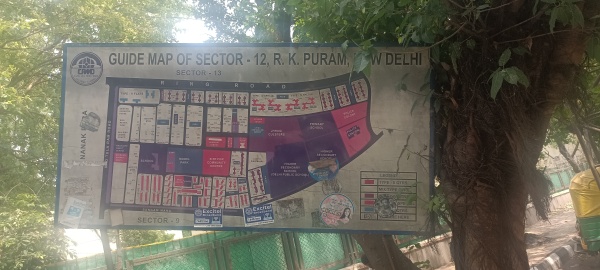
I have a craze for adding addresses to OSM. Unfortunately, in Delhi it is ridiculously hard to find a place with addresses properly displayed on the front.
Jetzt ist klar: die letzten vier Blog-Einträge werden automatisiert angezeigt. Weshalb auch immer das sein muss …


Nur um mal zu schauen, wieviele Einträge im Profil ausgebreitet werden.
Warum erscheint der letzte Blog-Eintrag automatisch, wenn man alle Blog-Einträge doch aufrufen kann, wenn man daran interessiert ist?
Hat jeder oft mehrere Jahre alter letzter Eintrag noch Relevanz?
Wieso hat man wie auch bei der Aktivitätsdarstellung keine Möglichkeit, selbst festzulegen, ob man das will? Im Forum war die Mehrheit für eine solche selbstbestimmte Lösung. Aber sowas interessiert die DWG ja nicht.
Hat jeder oft mehrere Jahre alter letzter Eintrag noch Relevanz?
Wieso hat man wie auch bei der Aktivitätsdarstellung keine Möglichkeit, selbst festzulegen, ob man das will? Im Forum war die Mehrheit für eine solche selbstbestimmte Lösung. Aber sowas interessiert die DWG ja nicht.

OpenStreetMap is a map of the world, created by people like you and free to use under an open license.
Following mobilization of volunteers and OSm newbies at Benue State University to kick-start a new chapter and team of Unique Mappers to drive Map Nigeria Mapathon project and the Makurdi on going project .We had a training for newbies. More than 20 newbies has been mobilized and signed up to OSM. These include William Hundu, the Team Coordinator, Lucas, Glory,Shater ,Jacob an others After the virtual meeting ,I hope to travel to Makurdi for in-person training and MOU with the University and Unique Mappers Network,Nigeria
Also .we are planning for stakeholders workshop for data use cases
Also .we are planning for stakeholders workshop for data use cases
Meeting with Newbies for Orientation at Unique Mappers Chapter Benue State
Following mobilization of volunteers and OSm newbies at Benue State University to kick-start a new chapter and team of Unique Mappers to drive Map Nigeria Mapathon project and the Makurdi on going project .We had a training for newbies.OpenStreetMap
So much data can be added, it’s very cool
I want to try to add a lot of QLD Translink services.
OpenStreetMap is just OpenMap at this point :P
OpenStreetMap is a map of the world, created by people like you and free to use under an open license.OpenStreetMap
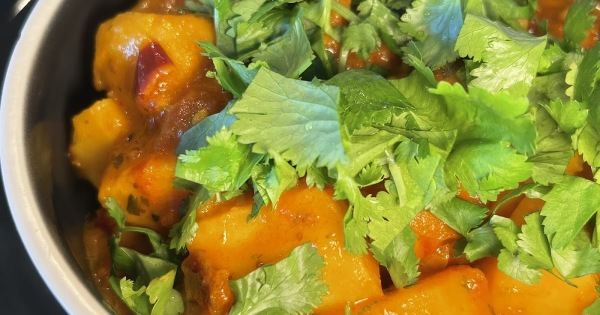
Weźmisz: kilo ziemniaków jedną cebula 3 ząbki czosnku 2 łyżki ciemnego sosu sojowego 2 łyżki nasion kolendry utarte w moździerzu 2 łyżki ol...
My Introduction as a 2025 HOT Voting Member Nominee
Transliteration Summer Project + Intro!
So today I get to talk other mappers. and I get to know how they map the challenges the have like; 1. Unavailability of internet connection 2. lack of Devices or tools for mapping etc. After the challenges we get to talk about solutions where we find a solution about getting a router and recharging it so the mappers in a particular area can come together and use it for mapping. And we still Provide systems for those without system to use for mapping till they get their own. I really learned alot from their experiences then by the end of this week i will be able to use JOSM cause we are suppose to be taught by a more experienced mapper. I really enjoy mapping and i still plan to meet mappers around the world so we can share our ideas together
Talking to other Mappers around the country
So today I get to talk other mappers. and I get to know how they map the challenges the have like; 1. Unavailability of internet connection 2. lack of Devices or tools for mapping etc.OpenStreetMap
Nisreen Mahmoud, 2025 HOT Voting Member Nominee
So, I got invited to speak at a certain OSM community’s monthly online talk.
Post-disaster mapping workshop with OpenStreetMap and JOSM
Today, Monday 19th May 2025, Made me one week at my IT, And so far i can say it has been great for me, Topping the chart, mapping over Thousands of building just in one week. Yes i sign up for this, that’s why I’m here to lead and take the topflight. Saying about today, I got the opportunity to teach and lecture one of my new IT College on what OpenStreetMap Is, His name is Alex though, And it was fun throughout the whole process. For fact, i know a lot is gonna come my way through this program, which I’m waiting for it and ready for success!!!
ONE WEEK AT INDUSTRIAL TRAINING
Today, Monday 19th May 2025, Made me one week at my IT, And so far i can say it has been great for me, Topping the chart, mapping over Thousands of building just in one week. Yes i sign up for this, thats why Im here to lead and take the topflight.OpenStreetMap
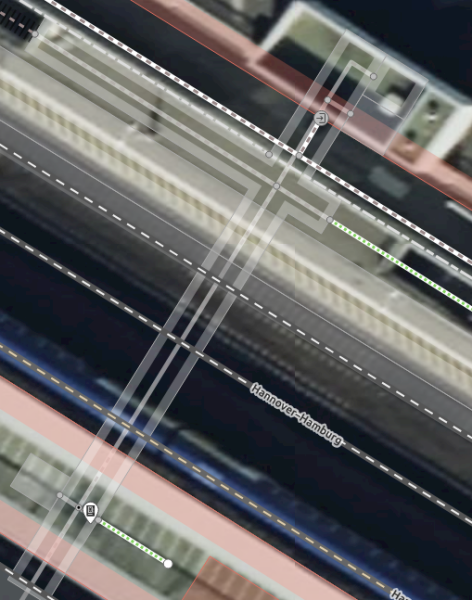
Hoffen wir mal, dass die Leute nicht auf die OpenStationMap zurückgreifen oder sich zumindest denken können, dass der Fahrstuhl so nicht aussieht.
So today i learned what is mapping and how to map and i mapped some building. it was a beautiful experience and i really enjoyed it. i met a guy called fortune he taught me almost everything i learned about mapping he is and easygoing guy, i still met a lot of fun people that will make learning easy. When i started i first learned what is mapping the site used for mapping which was later introduced as OSM US tasking manager. after that i created my account did my first mapping under the supervision of fortune and when he checked what i did and approved it i continued with some project he gave me and i finished 2 mapped task.
An open, cross cutting feature request for streetcomplete, everydoor, organicmaps and anyone else who targets mobile data capture.
Why: Google maps does this for reviews, to great effect. Ask me, while I am at a restaurant, with a physical menu “Is the cuisine vegetarian?” Or “what’s the website?” (Often printed on menus) Ask me, while I am a cafe, “is there outdoor seating?”
The problem this solves is often I don’t know when a favourite place is missing data. I go there all of the time, why wouldn’t it be mapped?
Give me a “no thanks” option so if I don’t want the intrusion I can opt out easily. But if I hit “yes please, nudge me”…
- Ask for location detection (yup), device activity sensors (maybe not already asked for)
- If I am detected in the same place and that place has a shop=* or amenity=* for 5-15 minutes
- Activity detected is “still” or similar (I put my phone down, or walked around a shop)
- Can I please get a nuanced prompt at some point either then or within a few hours?
- And limit current notifications to 1
Why: Google maps does this for reviews, to great effect. Ask me, while I am at a restaurant, with a physical menu “Is the cuisine vegetarian?” Or “what’s the website?” (Often printed on menus) Ask me, while I am a cafe, “is there outdoor seating?”
The problem this solves is often I don’t know when a favourite place is missing data. I go there all of the time, why wouldn’t it be mapped?
Give me a “no thanks” option so if I don’t want the intrusion I can opt out easily. But if I hit “yes please, nudge me”…
Following various discussions and requests over the previous years, Ive adapted parsing of the machine-readable tag in waymarkedtrails for route symbols to cover more use cases.
Announcing changes to `osmc:symbol` rendering in waymarkedtrails