Ok, my good friend Butterball wanted to pay me a visit from Bree. You all know how he is, super braggy. He told me he just got a brand new iPhone version 1 with 20 KB of RAM. I was like, Okay, cool, Butterball. Well see you. Just dont be braggy.


I have a couple of web maps, and they are supposed to show pedestrian crossings. If theres some crossing infrastructure (for example - zebra stripes, or tactile paving and a lowered kerb) youre supposed to see a crossing icon.
One of the most important things I learned about mapping with OpenStreetMap is how collaborative and detailed the global mapping community is. Every edit, no matter how small, contributes to a shared, constantly evolving map that supports navigation, humanitarian efforts, and local development. I realized how crucial accuracy and verification are, each feature needs to be placed and tagged correctly so that it’s useful for others. The most challenging part of editing OSM was learning the tagging system and ensuring that my edits followed mapping conventions. I mainly mapped in areas that lacked detailed data. Overall, the experience showed me how open data and collective participation can create powerful geographic resources that benefit communities around the world.
I edited an area where I grew up and frequently return. I chose to focus on some features in this area, as I figured some would be missing or incorrect due to fewer resources to investigate them and their lower priority given the town’s smaller size. I decided to start with elements I knew were recent in the town, such as the opening, closing, or rebranding of businesses. Then I moved into land-use elements, as some areas were assigned to a broader category when a more specific use could be assigned. I updated some other features as well, like microfeatures in Murphy Park and Canada Post mailboxes, but I mainly focused on businesses and updating the elements around them. I learned that, in OSM, you can get a lot more detail on land use in an area, which I thought was a really nice feature. One of the challenges for me was finding the aforementioned resources. If I had not frequented this area, it would be difficult for me to understand what to update or add, as the larger mapping services are also outdated. I foresee this as a challenge with OSM: without someone in a small town committed to making changes, they will slowly lag behind the already slow giants in the industry.
Why have I mapped what I have so far?
I edited an area where I grew up and frequently return. I chose to focus on some features in this area, as I figured some would be missing or incorrect due to fewer resources to investigate them and their lower priority given the towns smaller size.OpenStreetMap
The areas I mapped are familiar to me, so I was able to add new things that haven’t been marked on OpenStreetMap before. The most important thing about OpenStreetMap, to me at least, is how much contribution is needed to keep everything accurate and up to date. There were some edits in that area that were made 15 years ago, some that haven’t been modified to accurately display the area (under LuLu’s Variety, the block of houses is labelled as a park 15 years ago, when it isn’t a park now). The most challenge I had while editing was trying to accurately name certain buildings. For example, Itec Equipment is a building material supply store, but there weren’t any labels like “Supply Store” or “Building Supply Store”; the best I could label it with was “Rural Supplies Store, but I’m not sure if that is accurate.
Diary Entry
The areas I mapped are familiar to me, so I was able to add new things that havent been marked on OpenStreetMap before.OpenStreetMap
For this OpenStreetMap activity I focused on adding and improving features in an area I am familar with. I contributed information based on places I know, such as my University campus, which made the mapping process both meaningful and interesting to me. I think it is very important to share accurate and local information in OSM, because small details can make a big difference. I also noticed that some information around my area is outdated or incomplete, so in the future I would like to contribute more.
I seem to have started on the questionable task of adding all the bus routes in Halifax.
Ich suche gerne erstmal in blogs, aber hier geht es leider nicht, oder ich weiß nicht, wie. Eigentlich bin ich über die App “nora” darüber gefallen, daß eine Straße mit PLZ einem Ortsteil zugeordnet wurde, aber nicht dem Hauptort, wo diese Straße wirklich ist. Wie kann man so etwas korrigieren ?
beitrag im blog suchen / Ortsteil falsch
Ich suche gerne erstmal in blogs, aber hier geht es leider nicht, oder ich weiß nicht, wie. Eigentlich bin ich über die App nora darüber gefallen, daß eine Straße mit PLZ einem Ortsteil zugeordnet wurde, aber nicht dem Hauptort, wo diese Straße wirk…OpenStreetMap
Hi everyone,
Over the past few weeks, I’ve been reviewing and improving local mapping data across Alton, Bordon, Farnham, and the wider Hampshire area. It’s amazing how even small updates — like refining road access points, updating business locations, or adjusting residential boundaries — can make a big difference to navigation and accuracy.
As someone who regularly travels around the region for local services, I’ve seen first-hand how valuable accurate map data is for both residents and visitors. Ensuring locations, access roads, and property outlines are up to date helps everyone — from delivery drivers to local businesses and the community as a whole.
I’ll be continuing to review areas that may benefit from updated POIs and minor road edits over the coming months. A big thank you to everyone contributing across the South East — it’s a great community to be part of!
— Craig
Over the past few weeks, I’ve been reviewing and improving local mapping data across Alton, Bordon, Farnham, and the wider Hampshire area. It’s amazing how even small updates — like refining road access points, updating business locations, or adjusting residential boundaries — can make a big difference to navigation and accuracy.
As someone who regularly travels around the region for local services, I’ve seen first-hand how valuable accurate map data is for both residents and visitors. Ensuring locations, access roads, and property outlines are up to date helps everyone — from delivery drivers to local businesses and the community as a whole.
I’ll be continuing to review areas that may benefit from updated POIs and minor road edits over the coming months. A big thank you to everyone contributing across the South East — it’s a great community to be part of!
— Craig
Mit +++ gekennzeichnete Einträge basieren auf von mir programmierten Erweiterungen. Diese werden regelmäßig aktualisiert; im Kopf dieser Seite wird der Zeitstempel der letzten Aktualisierung angezeigt.
Koh Phangan is one of Thailand’s most enchanting islands, floating gracefully in the Gulf of Thailand between its famous neighbors, Koh Samui and Koh Tao. Known for its palm-fringed beaches, lush jungles, and vibrant culture, Koh Phangan is far more than just the site of the world-renowned Full Moon Party - it’s an island with a fascinating geological and cultural history shaped by magma, time, and the sea.
Millions of years ago, long before travelers set foot on its shores, the land that became Koh Phangan was formed deep within the Earth’s crust. The island originated from volcanic activity during a period of intense tectonic movement. As magma rose from beneath the Earth’s surface, it cooled and solidified, giving birth to the island’s granite core. That foundation still defines its rugged mountains and dramatic rock formations today.
Over millennia, erosion, wind, and the gentle rise and fall of sea levels sculpted the island into its present form. The lush jungle that now blankets Koh Phangan slowly took root over the ancient volcanic rock, transforming a once-fiery mass into a tropical paradise.
So, in a very real sense, Koh Phangan was forged from magma. Its land born of molten rock and shaped by the slow artistry of nature.
Archaeological evidence suggests that humans have lived on the island for over 2,000 years. Ancient pottery, tools, and inscriptions hint at early Malay and Thai settlers who relied on fishing, coconut farming, and trade with nearby islands.
By the 14th century, during the Srivijaya Empire, Koh Phangan was part of a thriving maritime network. It later became a peaceful retreat for Buddhist monks, and even Thailand’s King Rama V (Chulalongkorn) visited the island over a dozen times. His royal insignia can still be found carved into stones at Than Sadet Waterfall, a site of deep spiritual significance.
In the 20th century, Koh Phangan began to attract travelers seeking something different: a slower, more authentic Thailand. Backpackers discovered the island’s secluded beaches in the 1970s, and soon after, the legendary Full Moon Party was born on Haad Rin Beach. What started as a small gathering of friends celebrating under the moonlight became an international phenomenon, drawing thousands each month.
Yet beyond the party scene, Koh Phangan has managed to retain a rare balance. Its northern and eastern shores remain tranquil and largely undeveloped, home to yoga retreats, eco-resorts, and communities devoted to sustainable living. Inland, waterfalls, dense jungles, and secret temples make it a haven for hikers and spiritual seekers alike.
Koh Phangan is not just shaped by ancient magma. It is alive with energy. The whole year you can catch the stage of spectacular lightning storms that light up the sky over the Gulf of Thailand. Bolts crack across the horizon, illuminating palm trees, cliffs, and beaches in electric flashes. Lightning’s sound travel much slower on this island, about around 343 m/s (1230 km/h) at sea level, because of the warm tropical air. You can count the seconds between the flash and the thunder easily. Every 3 seconds ≈ 1 kilometer (or about 5 seconds ≈ 1 mile). So if you see lightning over Haad Rin Beach and hear thunder 9 seconds later, the strike was roughly 3 km away.
What makes Koh Phangan truly awesome is its duality. It is both wild and serene, ancient and alive, volcanic and oceanic. Whether you come for the spiritual energy of its temples, the rhythm of its beach festivals, or the simple joy of watching the sun set over the sea, the island has a way of pulling you into its rhythm.
Koh Phangan is not just a destination.It is a living reminder of the Earth’s power to create beauty from magma, time, and transformation.
Millions of years ago, long before travelers set foot on its shores, the land that became Koh Phangan was formed deep within the Earth’s crust. The island originated from volcanic activity during a period of intense tectonic movement. As magma rose from beneath the Earth’s surface, it cooled and solidified, giving birth to the island’s granite core. That foundation still defines its rugged mountains and dramatic rock formations today.
Over millennia, erosion, wind, and the gentle rise and fall of sea levels sculpted the island into its present form. The lush jungle that now blankets Koh Phangan slowly took root over the ancient volcanic rock, transforming a once-fiery mass into a tropical paradise.
So, in a very real sense, Koh Phangan was forged from magma. Its land born of molten rock and shaped by the slow artistry of nature.
Archaeological evidence suggests that humans have lived on the island for over 2,000 years. Ancient pottery, tools, and inscriptions hint at early Malay and Thai settlers who relied on fishing, coconut farming, and trade with nearby islands.
By the 14th century, during the Srivijaya Empire, Koh Phangan was part of a thriving maritime network. It later became a peaceful retreat for Buddhist monks, and even Thailand’s King Rama V (Chulalongkorn) visited the island over a dozen times. His royal insignia can still be found carved into stones at Than Sadet Waterfall, a site of deep spiritual significance.
In the 20th century, Koh Phangan began to attract travelers seeking something different: a slower, more authentic Thailand. Backpackers discovered the island’s secluded beaches in the 1970s, and soon after, the legendary Full Moon Party was born on Haad Rin Beach. What started as a small gathering of friends celebrating under the moonlight became an international phenomenon, drawing thousands each month.
Yet beyond the party scene, Koh Phangan has managed to retain a rare balance. Its northern and eastern shores remain tranquil and largely undeveloped, home to yoga retreats, eco-resorts, and communities devoted to sustainable living. Inland, waterfalls, dense jungles, and secret temples make it a haven for hikers and spiritual seekers alike.
Koh Phangan is not just shaped by ancient magma. It is alive with energy. The whole year you can catch the stage of spectacular lightning storms that light up the sky over the Gulf of Thailand. Bolts crack across the horizon, illuminating palm trees, cliffs, and beaches in electric flashes. Lightning’s sound travel much slower on this island, about around 343 m/s (1230 km/h) at sea level, because of the warm tropical air. You can count the seconds between the flash and the thunder easily. Every 3 seconds ≈ 1 kilometer (or about 5 seconds ≈ 1 mile). So if you see lightning over Haad Rin Beach and hear thunder 9 seconds later, the strike was roughly 3 km away.
What makes Koh Phangan truly awesome is its duality. It is both wild and serene, ancient and alive, volcanic and oceanic. Whether you come for the spiritual energy of its temples, the rhythm of its beach festivals, or the simple joy of watching the sun set over the sea, the island has a way of pulling you into its rhythm.
Koh Phangan is not just a destination.It is a living reminder of the Earth’s power to create beauty from magma, time, and transformation.
Koh Phangan: The Gem Born from Magma and Sea
Koh Phangan is one of Thailands most enchanting islands, floating gracefully in the Gulf of Thailand between its famous neighbors, Koh Samui and Koh Tao.OpenStreetMap
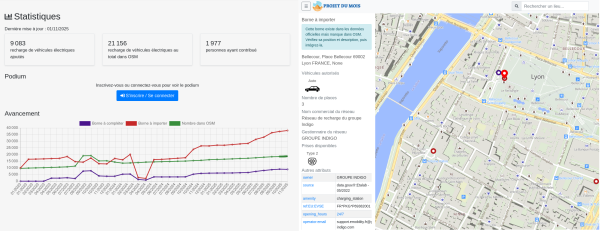
Some news and visions about topic focused contribution monitoring capabilities of ProjetDuMois
Im raising funds to purchase the historic 1:50,000 topographic map series of Eswatini (formerly Swaziland), so I can preserve and share them online as a seamless, zoomable mosaic - free for everyone.
This is the story of how the cycling association measured streets in Bruges and got what they wanted - a cycling zone - 5 years after the initial campaign
W Join Poland zajmujemy się kompleksową likwidacją spółek, pomagając przedsiębiorcom uniknąć błędów i problemów z urzędami. Nasza usługa obejmuje:
I have been mapping addresses on OpenStreetMap since a long time. During this time I have been also frequently referring to the wiki page for guidance whenever I felt my method was wrong.
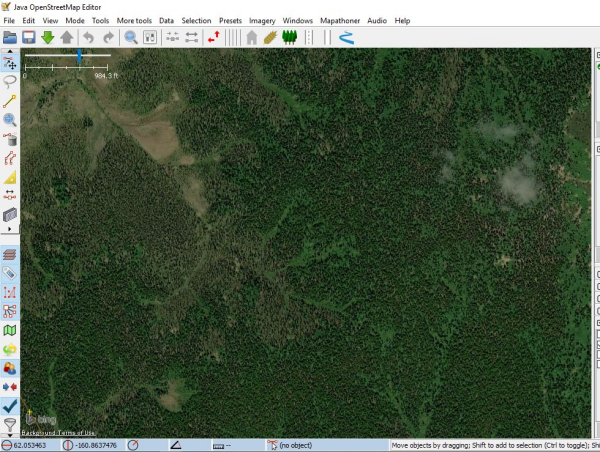
When I was using JOSM tonight, the satellite imagery shown on my screen reminded me of something.
Every Day Allowed morning 10:30 Am to Night 8:30 Pm every place will notify with address details updated no gmap unrequired because unique address Identity will require in osm map contact on WhatsApp or call +918332027008
My morning walks got replaced by Car driving lessons.
I turn on my GPS and go for driving and after returning I upload the traces to OSM.
I am wondering other than uploading the GPS traces, is there any other way I can utilize my local knowledge to contribute to OSM.
I turn on my GPS and go for driving and after returning I upload the traces to OSM.
I am wondering other than uploading the GPS traces, is there any other way I can utilize my local knowledge to contribute to OSM.
I’m honored to begin my journey as a 2025 Fellow with the Open Mapping Advocacy Network (OMAN) under the HOT Open Mapping Hub – West and Northern Africa (WNAH). Over the years, I have actively contributed to the open mapping ecosystem through OpenStreetMap Sierra Leone and YouthMappers, as a 2023 YouthMappers Leadership Summit Fellow and 2023–2024 YouthMappers Regional Ambassador for West Africa and a Trainer, OSM Sierra Leone. These experiences have shaped my passion for leveraging geospatial technology as a tool for sustainable development, data-driven decision-making, and youth empowerment.
I applied to join the OMA Fellowship because I deeply believe in the transformative power of open data and participatory mapping to promote inclusion, community actions, and resilience. The OMAN Learning Initiative provides a meaningful opportunity to expand my skills in course design, open mapping advocacy, and community engagement, while collaborating with my co-fellow to co-create impactful learning resources that empower local mappers and communities across West Africa. Together with my co-fellow Jimerveille Thierry-Ngouama, we’ll be co-developing the course “Open Mapping for City Management and Planning.” This learning initiative explores vital and practical themes such as: -Open Data for Sustainable Cities -Informal Settlement Mapping -Disaster Preparedness and Resilience -Disability Assessment and Accessibility Mapping -Revenue Generation and Urban Innovation These themes strongly resonate with challenges faced across West African cities, where limited access to reliable geospatial data often hinders effective governance and urban development. Open mapping offers a powerful and practical pathway to strengthen urban planning, disaster risk management, and inclusive infrastructure design ensuring that no community is left behind.
Open mapping matters to me because it gives people and places visibility and voice. It allows communities to document their realities, share their stories, and use data as a tool for advocacy and positive change. I have witnessed firsthand how collaborative mapping projects can bridge the gap between local governments, NGOs, and citizens, fostering trust and enabling more equitable and evidence-based decisions that improve lives. As an OMAN Fellow, I am truly excited to learn, collaborate, and contribute to advancing open mapping across Africa ,involving in initiatives that promote inclusive growth, sustainable cities, and empowered local voices through open data.
#OMANLearningInitiative #OpenData #YouthMappers #OpenStreetMap #WNAH #SierraLeone #CommunityEngagement #UrbanPlanning #SustainableCities
I applied to join the OMA Fellowship because I deeply believe in the transformative power of open data and participatory mapping to promote inclusion, community actions, and resilience. The OMAN Learning Initiative provides a meaningful opportunity to expand my skills in course design, open mapping advocacy, and community engagement, while collaborating with my co-fellow to co-create impactful learning resources that empower local mappers and communities across West Africa. Together with my co-fellow Jimerveille Thierry-Ngouama, we’ll be co-developing the course “Open Mapping for City Management and Planning.” This learning initiative explores vital and practical themes such as: -Open Data for Sustainable Cities -Informal Settlement Mapping -Disaster Preparedness and Resilience -Disability Assessment and Accessibility Mapping -Revenue Generation and Urban Innovation These themes strongly resonate with challenges faced across West African cities, where limited access to reliable geospatial data often hinders effective governance and urban development. Open mapping offers a powerful and practical pathway to strengthen urban planning, disaster risk management, and inclusive infrastructure design ensuring that no community is left behind.
Open mapping matters to me because it gives people and places visibility and voice. It allows communities to document their realities, share their stories, and use data as a tool for advocacy and positive change. I have witnessed firsthand how collaborative mapping projects can bridge the gap between local governments, NGOs, and citizens, fostering trust and enabling more equitable and evidence-based decisions that improve lives. As an OMAN Fellow, I am truly excited to learn, collaborate, and contribute to advancing open mapping across Africa ,involving in initiatives that promote inclusive growth, sustainable cities, and empowered local voices through open data.
OpenMapping #OMANFellowship #OMANFellows2025
#OMANLearningInitiative #OpenData #YouthMappers #OpenStreetMap #WNAH #SierraLeone #CommunityEngagement #UrbanPlanning #SustainableCities
About me
A geospatial tools and technologies enthusiast from the Republic of Congo. First, a chapter’s Vice-President of YouthMappers de l’Université DENIS SASSOU-N’GUESSO, before serving as a Technical YouthMappers Regional Ambassador. Now, more than pleased to shape the future of Open Mapping within the North and West African region as a Content and Community Engagement Fellow at the HOT WNA Open Mapping Hub.
How did I end up here?
Having witnessed the power of Open Mapping, I am dedicated to raising awareness around it and its related tools and technologies. So, when I heard about the Open Mapping Advocacy Network (OMAN) Learning Initiative, I felt excited to dive into it. More interestingly, the selection process to become a fellow in this program was one of the best experiences I have had. Indeed, no interview for shortlisted, the selection team directly provides us task to complete, linked to what is expected of us and what we are supposed to be doing once selected. This process taught me a great deal about situational thinking and problem-solving.
According to my view, why is open mapping so important?
Open mapping is neither just about freely available online maps for getting from place A to B nor collaborative mapping projects anyone can join. It’s really about democratizing locational knowledge for facilitating decision making, helping problem solving, and supporting one’s geographic experience. The reason why the course under development is titled “Open mapping for sustainable cities” and will be subdivided into five (05) modules, emphasizing an introduction and four (04) mapping thematic as follows: informal settlements, disaster management, disability assessments, and revenue generation.
Starting my fellowship at WNA HUB
A geospatial tools and technologies enthusiast from the Republic of Congo. First, a chapters Vice-President of YouthMappers de lUniversité DENIS SASSOU-NGUESSO, before serving as a Technical YouthMappers Regional Ambassador.OpenStreetMap
this is just a little page for me to keep some of my Ultra experiments, will write more when time allows
I had the incredible opportunity to represent Vriddhi Project – UNOPS Sri Lanka at the State of the Map 2025 Conference, where I presented a talk on “Mapping for Impact: Introducing Open Mapping to Civil Society in Sri Lanka.”
During this session, I shared how Vriddhi Project empowers civil society organizations (CSOs) across Sri Lanka to harness data and geospatial technologies for better advocacy, planning, and community engagement. Civil society often faces challenges in visualizing, analyzing, and applying data effectively. Geospatial tools allow CSOs to map resources, identify gaps, track progress, and communicate evidence-based solutions, amplifying their impact at the grassroots level.
The session resonated strongly with the audience because it highlighted real-life applications, measurable results, and the transformative power of open mapping. Participants were inspired to see how geospatial tools can turn abstract data into actionable insights that drive social change.
Thanks to State Of The Map and Open Mapping Hub - Asia Pacific for creating opportunities
During this session, I shared how Vriddhi Project empowers civil society organizations (CSOs) across Sri Lanka to harness data and geospatial technologies for better advocacy, planning, and community engagement. Civil society often faces challenges in visualizing, analyzing, and applying data effectively. Geospatial tools allow CSOs to map resources, identify gaps, track progress, and communicate evidence-based solutions, amplifying their impact at the grassroots level.
The session resonated strongly with the audience because it highlighted real-life applications, measurable results, and the transformative power of open mapping. Participants were inspired to see how geospatial tools can turn abstract data into actionable insights that drive social change.
Thanks to State Of The Map and Open Mapping Hub - Asia Pacific for creating opportunities

I had the incredible opportunity to represent Vriddhi Project – UNOPS Sri Lanka at the State of the Map 2025, held in Manila, Philippines from October 3rd to 5th, 2025.
As part of this global gathering of open mapping enthusiasts, I conducted a hands-on workshop titled “Getting Started with QGIS: Beginner’s Guide to Mapping with Open Source Tools.” The session introduced participants to the exciting world of open geospatial technology and its potential to create positive impact at community level.
During the workshop, we explored: - OpenStreetMap (OSM) and the HOT Tasking Manager for collaborative and humanitarian mapping. - Open data sources such as Planet OSM, Geofabrik, BBBike, and Overpass Turbo. - How to select the right data type, perform data cleaning, and integrate datasets into QGIS effectively. - Practical mapping exercises that turned open data into meaningful stories and insights.
The energy in the room was inspiring — participants from different backgrounds came together to learn, question, and create. The conversations around open data, inclusivity, and sustainable development reaffirmed my belief that maps are more than visuals — they’re bridges that connect people, places, and purpose.
Heartfelt thanks to the State Of The Map 2025 organizers, Open Mapping Hub - Asia Pacific and the passionate mapping community for this enriching experience!
As part of this global gathering of open mapping enthusiasts, I conducted a hands-on workshop titled “Getting Started with QGIS: Beginner’s Guide to Mapping with Open Source Tools.” The session introduced participants to the exciting world of open geospatial technology and its potential to create positive impact at community level.
During the workshop, we explored: - OpenStreetMap (OSM) and the HOT Tasking Manager for collaborative and humanitarian mapping. - Open data sources such as Planet OSM, Geofabrik, BBBike, and Overpass Turbo. - How to select the right data type, perform data cleaning, and integrate datasets into QGIS effectively. - Practical mapping exercises that turned open data into meaningful stories and insights.
The energy in the room was inspiring — participants from different backgrounds came together to learn, question, and create. The conversations around open data, inclusivity, and sustainable development reaffirmed my belief that maps are more than visuals — they’re bridges that connect people, places, and purpose.
Heartfelt thanks to the State Of The Map 2025 organizers, Open Mapping Hub - Asia Pacific and the passionate mapping community for this enriching experience!

A few days ago I found what appears to be a criminaly underviewed video (currently with 81 views) about imagery interpretation. I almost cannot believe I hadnt seen it up untill now.

If you are like me, you like things fast. Hobbits aren’t know for this, but we Mappins a little different you know…. more to come.


Mapped a new bit of The Meadoway this morning. Its not quite open yet so there are construction gates (TIL theyre called barrier=hampshire_gate). I will have to remember to remove them when the trail opens (December, they say).

We (Teritorio.fr) publish an approach and an implementation of a strategy to reconstruct OpenStreetMap object history at a semantic et geospatial level, beyond the technical object history.

When processing places of worship for the National Crisis Center (Belgium), I run into the problem that its quite hard to filter just significant places of worship from OSM.

Some people are confused about neis-one Type? badge below Discussed changesets section. So what Its actualy mean?

I had the incredible opportunity to represent Vriddhi Project – UNOPS Sri Lanka at the State of the Map 2025 Conference, where I presented a talk on “Mapping for Impact: Introducing Open Mapping to Civil Society in Sri Lanka.”
During this session, I shared how Vriddhi Project empowers civil society organizations (CSOs) across Sri Lanka to harness data and geospatial technologies for better advocacy, planning, and community engagement. Civil society often faces challenges in visualizing, analyzing, and applying data effectively. Geospatial tools allow CSOs to map resources, identify gaps, track progress, and communicate evidence-based solutions, amplifying their impact at the grassroots level.
The session resonated strongly with the audience because it highlighted real-life applications, measurable results, and the transformative power of open mapping. Participants were inspired to see how geospatial tools can turn abstract data into actionable insights that drive social change.
Thanks to State Of The Map and Open Mapping Hub - Asia Pacific for creating opportunities
During this session, I shared how Vriddhi Project empowers civil society organizations (CSOs) across Sri Lanka to harness data and geospatial technologies for better advocacy, planning, and community engagement. Civil society often faces challenges in visualizing, analyzing, and applying data effectively. Geospatial tools allow CSOs to map resources, identify gaps, track progress, and communicate evidence-based solutions, amplifying their impact at the grassroots level.
The session resonated strongly with the audience because it highlighted real-life applications, measurable results, and the transformative power of open mapping. Participants were inspired to see how geospatial tools can turn abstract data into actionable insights that drive social change.
Thanks to State Of The Map and Open Mapping Hub - Asia Pacific for creating opportunities

I had the incredible opportunity to represent Vriddhi Project – UNOPS Sri Lanka at the State of the Map 2025, held in Manila, Philippines from October 3rd to 5th, 2025.
As part of this global gathering of open mapping enthusiasts, I conducted a hands-on workshop titled “Getting Started with QGIS: Beginner’s Guide to Mapping with Open Source Tools.” The session introduced participants to the exciting world of open geospatial technology and its potential to create positive impact at community level.
During the workshop, we explored: - OpenStreetMap (OSM) and the HOT Tasking Manager for collaborative and humanitarian mapping. - Open data sources such as Planet OSM, Geofabrik, BBBike, and Overpass Turbo. - How to select the right data type, perform data cleaning, and integrate datasets into QGIS effectively. - Practical mapping exercises that turned open data into meaningful stories and insights.
The energy in the room was inspiring — participants from different backgrounds came together to learn, question, and create. The conversations around open data, inclusivity, and sustainable development reaffirmed my belief that maps are more than visuals — they’re bridges that connect people, places, and purpose.
Heartfelt thanks to the State Of The Map 2025 organizers, Open Mapping Hub - Asia Pacific and the passionate mapping community for this enriching experience!
As part of this global gathering of open mapping enthusiasts, I conducted a hands-on workshop titled “Getting Started with QGIS: Beginner’s Guide to Mapping with Open Source Tools.” The session introduced participants to the exciting world of open geospatial technology and its potential to create positive impact at community level.
During the workshop, we explored: - OpenStreetMap (OSM) and the HOT Tasking Manager for collaborative and humanitarian mapping. - Open data sources such as Planet OSM, Geofabrik, BBBike, and Overpass Turbo. - How to select the right data type, perform data cleaning, and integrate datasets into QGIS effectively. - Practical mapping exercises that turned open data into meaningful stories and insights.
The energy in the room was inspiring — participants from different backgrounds came together to learn, question, and create. The conversations around open data, inclusivity, and sustainable development reaffirmed my belief that maps are more than visuals — they’re bridges that connect people, places, and purpose.
Heartfelt thanks to the State Of The Map 2025 organizers, Open Mapping Hub - Asia Pacific and the passionate mapping community for this enriching experience!

Im writing my first OSM Diary entry in hopes that some local Thunder Bay, ON or Northwestern Ontario mapper(s) will find me here.

Bali, Indonesia’s “Island of the Gods,” is celebrated for its natural beauty and spiritual heritage, yet faces a complex array of disaster risks shaped by tectonic activity, climate variability, and human development.

The vector tiles here have always had names in the local language, so Welsh-speaking parts of Wales have Welsh names shown and English-speaking parts English names:


Im excited to share PowerShell.Map - a new module that brings interactive OpenStreetMap visualization to the PowerShell command line!
