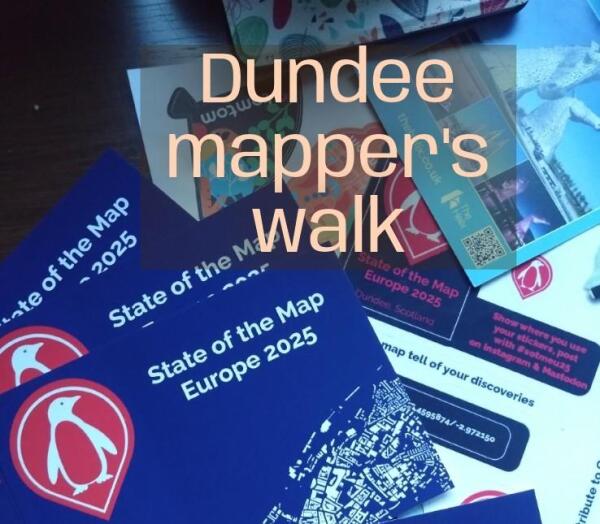

For the last 10 days Ive been travelling in Europe to go to OSM events. I have some spare time before my flights to get home to Vancouver, so Im posting a brief overview of the events and what got done.
The State of the Map Kerala 2025 will take place in Payyannur—an area known for the cultural vibrancy of Theyyam, the coastal charm of North Malabar, and the ecological richness of the Kunjimangalam mangrove belt, the largest mangrove stretch in Kera…

I’ve been tagging my local area for the last 2 years, and where I live, there are areas which are small yet notable, often past plantations or well known locations usually with origins in colonialist’s estates. For example, Clement Hill was a plantation centered on the house called Mound Court, where Benjamin Clement and his descendants once did their business. As such, the location got called Clement Hill. Similar things happened with Viewmont, New Glasgow, Green Hill, etc. What has confused me though is how to tag these locations. Despite all being the same sort of thing, they all get treated differently, even between maps. Yet they are all single notable locations, either inhabited or not, centered around tracts of land where farms or plantation houses were or are present. There are multiple tags in OSM that cover similar ideas, such as: 1. a locality 2. an isolated settlement 3. a plot 4. a farm 5. a named house 6. a residential area 7. a historic location And as I said, maps treat them differently. Some maps treat them as residences while others highlight them like they do hamlets and towns. Sometimes the location is specified as the name of the plot while other times it’s referring to the general area instead. So how do you tag all these similar yet different locations? I’d like an unambiguous “plantation” or “estate” location tag which signifies that the location: 1. is or was a place where an estate was located. 2. is used like a general settlement name . 3. is between a farm, a plot, and a locality or isolated settlement as not all of these locations are exactly any of them. 4. but conveys the one idea of a significant plantation or similar settlement, either existent or no longer existent, that can be surrounded by smaller residences or be a lone estate, as these 2 scenarios are common in rural Virginia and are both considered the same sort of thing.
Tagging Rural Locations - Issues
Ive been tagging my local area for the last 2 years, and where I live, there are areas which are small yet notable, often past plantations or well known locations usually with origins in colonialists estates.OpenStreetMap
It’s been a while since I posted, and we’ve been working hard in the background to add more (and safe) OSM contributing. Since last we spoke, we’ve actually been in court, defending ourselves against a “competitor” (I wouldn’t consider us competitors, we’re in the same space but they’re for-pay and we’re Libre, Open Source, Open, and Free) who claimed we “stole” their data.
Funnily enough, “their” data seems to come straight from OSM. When I contributed an albergue a while back, I made a typo (è instead of é) and it’s in their dataset. So, yeah, we won, they paid, and they cried. Cheaters always accuse others of cheating.
We renamed ourselves from Camino Now to Ultreia.me, because another competitor didn’t like the fact that we had “Camino” in the name and sued as well.
There is a LOT of money to be made with those apps, which is why they all hate being threatened by a free/libre alternative.
Anyhow, we now sync hostel data back. Mainly telephone numbers, opening hours, wheelchair access, kitchen access, washer/dryer, those things.
Funnily enough, “their” data seems to come straight from OSM. When I contributed an albergue a while back, I made a typo (è instead of é) and it’s in their dataset. So, yeah, we won, they paid, and they cried. Cheaters always accuse others of cheating.
We renamed ourselves from Camino Now to Ultreia.me, because another competitor didn’t like the fact that we had “Camino” in the name and sued as well.
There is a LOT of money to be made with those apps, which is why they all hate being threatened by a free/libre alternative.
Anyhow, we now sync hostel data back. Mainly telephone numbers, opening hours, wheelchair access, kitchen access, washer/dryer, those things.
Camino de Santiago Hostels
Its been a while since I posted, and weve been working hard in the background to add more (and safe) OSM contributing.OpenStreetMap
The goal of this project is to improve address coverage in the City of Brampton on OpenStreetMap by verifying and adding missing address information using open data provided through the Brampton GeoHub.
DIY Depot USA is a trusted home improvement and cabinetry company specializing in kitchen cabinets Bakersfield homeowners love. We offer premium, real wood cabinetry with a wide range of customizable designs for kitchens and bathrooms.
Serving clients across California, Arizona, and Nevada, DIY Depot USA provides end-to-end solutions including free 3D design consultations, design support, and professional installation services. Whether you’re remodeling your kitchen or upgrading your bathroom, our expert team ensures high-quality craftsmanship, durability, and timeless style.
Serving clients across California, Arizona, and Nevada, DIY Depot USA provides end-to-end solutions including free 3D design consultations, design support, and professional installation services. Whether you’re remodeling your kitchen or upgrading your bathroom, our expert team ensures high-quality craftsmanship, durability, and timeless style.
Okay, warum nicht mal filmen, was man so bei OpenStreetMap für Änderungen vornimmt?
About eight months ago I started mapping my hometown, and earlier today I reached a major milestone of having gone over everywhere boxed in by the Sabine River Diversion Canal and the CPKC railroad.
Zanim zaczniesz gotować, to rozważ zakup żeliwnej foremki na babeczki. Mam taką na 6 babeczek po 6cm średnicy i 3cm głębokości. Ważne, ż...

As part of the Ireland chapter of OpenStreetMap a few years ago I set up a tileserver and a map frontend that defaulted to showing placenames in the Irish language (Gaeilge).
Recently I spent some time improving both these services.
Recently I spent some time improving both these services.
Dear OSM users,
I need to inform you that, unfortunately, the Toledo Province area is quite neglected and lacks detail. This isn’t anyone’s fault, obviously; it’s something that needs improvement, and together we can fix it. Furthermore, one of the most populated areas of Toledo, the La Sagra region and its surroundings, lacks updates and good features. We also cover the southern Madrid area, which also lacks updates.
WE NEED PEOPLE WHO CARE ABOUT THIS AREA.
LET’S DO SOMETHING BIG.
Thanks for reading.
I need to inform you that, unfortunately, the Toledo Province area is quite neglected and lacks detail. This isn’t anyone’s fault, obviously; it’s something that needs improvement, and together we can fix it. Furthermore, one of the most populated areas of Toledo, the La Sagra region and its surroundings, lacks updates and good features. We also cover the southern Madrid area, which also lacks updates.
WE NEED PEOPLE WHO CARE ABOUT THIS AREA.
LET’S DO SOMETHING BIG.
Thanks for reading.
I was checking the map in all of the world and i see things that broke my eyes. I never been there but the things i found are don’t common.
I had to add so many things to this place during my courent day in the job. I need someone that with me add to Getafe some things that there aren’t on the map. Please, write me in private to let me now who want to colaborate in this proyect that is name: Lets help Getafe!!!! Let me now who is interesed writting me. I will read your menseges. Bye Kitsunderoku
WHY LOS MOLINOS GETAFE IS SO IGNORED BY SANCHI AND OTHER
I had to add so many things to this place during my courent day in the job. I need someone that with me add to Getafe some things that there arent on the map.OpenStreetMap
More recently I find myself addicted to OSM once more after a long hiatus. I guess working in the civil road design space has me interested in capturing features around the streets such as crossings, sidewalks, street furniture and recreation spaces.
I’m shocked by the number of sidewalks I have found that cross a street not as a crossing. I’m fixing these as I find them.
My end goal is to try and resolve as many items from StreetComplete as I can around where I live and work, adding to the accuracy of the overall map model locally.
I’m shocked by the number of sidewalks I have found that cross a street not as a crossing. I’m fixing these as I find them.
My end goal is to try and resolve as many items from StreetComplete as I can around where I live and work, adding to the accuracy of the overall map model locally.
Veteran addicted once more
More recently I find myself addicted to OSM once more after a long hiatus. I guess working in the civil road design space has me interested in capturing features around the streets such as crossings, sidewalks, street furniture and recreation spaces…OpenStreetMap
Neue Edits
Da ich Organic Maps am Handy nutze und entdeckt habe, dass manche Informationen oft jahrealt und überholt sind, bearbeite ich nun wieder OSM.
Sammlung - öffentlich zugängliche Klavier
Eine Idee, die ich umsetzen will, ist eine Art Übersichtskarte von öffentlich zugänglichen Pianos und Flügeln. Ich finde es selbst oft sehr reizvoll beim Reisen, wenn man als Musiker ein freistehendes, öffentlich zugängliches Instrument wie ein Klavier entdeckt und darauf spielen darf.
Helping Hands Labor Services works with Homeowners; Business Owners; Realtors; General Contractors, and other to provide the following services:
Examples of General Labor & Moving Assistance: 📦 Loading and unloading moving trucks, trailers, or storage units
🛋 Rearranging or relocating furniture within a home or office
🪑 Event setup and takedown (chairs, tables, tents, etc.)
🛠 Light assembly or disassembly of furniture and equipment
🧹 Basic cleanup after projects, events, or moves
🌿 Yard and outdoor help (raking, hauling debris, light landscaping tasks)
🚚 Assisting with deliveries and carrying heavy items
🖼 Hanging pictures, shelves, or light décor items
🧰 General “extra hands” labor for small projects and tasks
Examples of Light Home & Office Cleaning: 🧹 Sweeping, vacuuming, and mopping floors
🪞 Dusting surfaces, shelves, and furniture
🛋 Wiping down counters, tables, and desks
🚪 Cleaning doors, handles, and light switches
🪟 Spot-cleaning windows and mirrors
🛁 Bathroom wipe-downs (sinks, counters, mirrors, toilets)
🍽 Light kitchen cleaning (counters, sinks, appliance surfaces)
🗑 Emptying trash and replacing liners
🧺 Straightening up common areas and tidying spaces
Restocking supplies
⚠️ Note: Deep cleaning services (carpet shampooing, grout scrubbing, appliance deep-cleaning, etc.) are considered Specialty Services and require an estimate.
Common Basic Home Repair Tasks We Handle: 🔨 Minor drywall patching & caulking repairs
🚪 Door adjustments, hinge repairs, and handle replacements / smart locks
💡 Light outlet replacement & bulb changes
🚰 Leaky faucet repairs & minor clogs
🪛 Furniture assembly & small carpentry projects
🖼 Hanging shelves, mirrors, and picture frames
🪟 Weatherstripping & minor window repairs
🧰 General maintenance & handyman tasks around the home
Examples of Specialty Construction Services: 🏠 Home remodeling & full renovations
🛠 Room additions & structural modifications
🪚 Custom carpentry & built-ins
🧱 Flooring installation & tile work
🪜 Roofing & siding projects
🚿 Bathroom & kitchen remodels
🚰 Advanced plumbing installation & repairs
❄️ HVAC installation & major repairs
⚡ Electrical system upgrades & rewiring
🎨 Large-scale painting & finishing projects
🔨 Decks, patios, and outdoor structures
Interior and Exterior Painting
⚠️ Note: Specialty projects require an in-home estimate. A detailed bid, priced at Industry Standards will be provided within 48 hours after the consultation.
Examples of General Labor & Moving Assistance: 📦 Loading and unloading moving trucks, trailers, or storage units
🛋 Rearranging or relocating furniture within a home or office
🪑 Event setup and takedown (chairs, tables, tents, etc.)
🛠 Light assembly or disassembly of furniture and equipment
🧹 Basic cleanup after projects, events, or moves
🌿 Yard and outdoor help (raking, hauling debris, light landscaping tasks)
🚚 Assisting with deliveries and carrying heavy items
🖼 Hanging pictures, shelves, or light décor items
🧰 General “extra hands” labor for small projects and tasks
Examples of Light Home & Office Cleaning: 🧹 Sweeping, vacuuming, and mopping floors
🪞 Dusting surfaces, shelves, and furniture
🛋 Wiping down counters, tables, and desks
🚪 Cleaning doors, handles, and light switches
🪟 Spot-cleaning windows and mirrors
🛁 Bathroom wipe-downs (sinks, counters, mirrors, toilets)
🍽 Light kitchen cleaning (counters, sinks, appliance surfaces)
🗑 Emptying trash and replacing liners
🧺 Straightening up common areas and tidying spaces
Restocking supplies
⚠️ Note: Deep cleaning services (carpet shampooing, grout scrubbing, appliance deep-cleaning, etc.) are considered Specialty Services and require an estimate.
Common Basic Home Repair Tasks We Handle: 🔨 Minor drywall patching & caulking repairs
🚪 Door adjustments, hinge repairs, and handle replacements / smart locks
💡 Light outlet replacement & bulb changes
🚰 Leaky faucet repairs & minor clogs
🪛 Furniture assembly & small carpentry projects
🖼 Hanging shelves, mirrors, and picture frames
🪟 Weatherstripping & minor window repairs
🧰 General maintenance & handyman tasks around the home
Examples of Specialty Construction Services: 🏠 Home remodeling & full renovations
🛠 Room additions & structural modifications
🪚 Custom carpentry & built-ins
🧱 Flooring installation & tile work
🪜 Roofing & siding projects
🚿 Bathroom & kitchen remodels
🚰 Advanced plumbing installation & repairs
❄️ HVAC installation & major repairs
⚡ Electrical system upgrades & rewiring
🎨 Large-scale painting & finishing projects
🔨 Decks, patios, and outdoor structures
Interior and Exterior Painting
⚠️ Note: Specialty projects require an in-home estimate. A detailed bid, priced at Industry Standards will be provided within 48 hours after the consultation.
Collaborating to add verified information to OpenStreetMap can significantly improve global navigation and community planning. I am a firm believer that each contribution helps create a more accurate, accessible, and connected world. Together, we can truly make a difference!
Having grown up in the Current River Area there are many same details I was able to add to the map such as small back roads that are mainly used my locals. Additionally one thing I noticed with is that many features where outdates. There where restaurants and stores that closed down years ago and new ones have since opened up in their place. So I updated the map to have the newest data. From using openstreetmap I learned a lot about citizen mapping and the people who live in an area know it the best to map it. But also using a mapping website open to the public comes with risks of inaccuracies. What I found to be challenging was that some houses weren’t properly lined up so it impacted when I tried to add a new house.
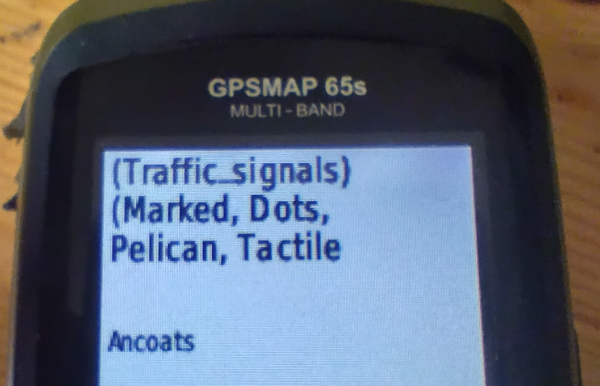
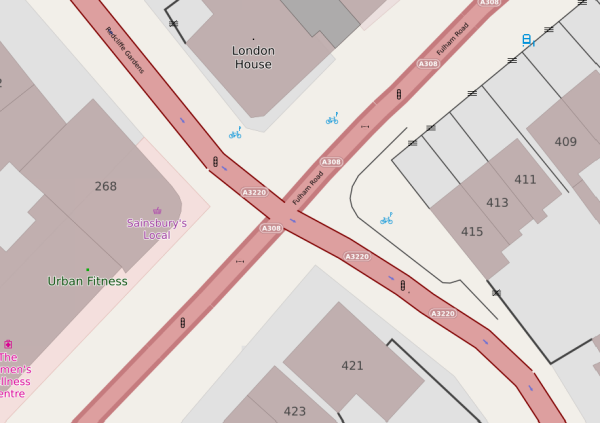
and following on from the previous entry, Maps for Garmin devices at map.atownsend.org.uk now show crossing details too:
I am a new editor of OSM, and I thought I would explore the tools and update familiar areas for myself. I added and updated areas in Bronte Creek Provincial Park. The OSM tools made it really easy to add new areas, points of interest, add some walking trails and label everything with accurate details. The park was already mapped with buildings, trails, roads, parking lots and much more. A lot of what I found myself doing was adding newly labelled areas, ex. Cow Barn, Cow Pasture. I am very familiar with BCPP, and now anyone looking to go to the park can have a better idea of what is really there. OMS is very easy to navigate, and I enjoyed using this mapping software. Not only is it a great tool to add for other people to use, but it is also great to see what is really in your surroundings.
First Time Using OpenStreetMap
I am a new editor of OSM, and I thought I would explore the tools and update familiar areas for myself. I added and updated areas in Bronte Creek Provincial Park.OpenStreetMap
Ok, my good friend Butterball wanted to pay me a visit from Bree. You all know how he is, super braggy. He told me he just got a brand new iPhone version 1 with 20 KB of RAM. I was like, Okay, cool, Butterball. Well see you. Just dont be braggy.

I have a couple of web maps, and they are supposed to show pedestrian crossings. If theres some crossing infrastructure (for example - zebra stripes, or tactile paving and a lowered kerb) youre supposed to see a crossing icon.
One of the most important things I learned about mapping with OpenStreetMap is how collaborative and detailed the global mapping community is. Every edit, no matter how small, contributes to a shared, constantly evolving map that supports navigation, humanitarian efforts, and local development. I realized how crucial accuracy and verification are, each feature needs to be placed and tagged correctly so that it’s useful for others. The most challenging part of editing OSM was learning the tagging system and ensuring that my edits followed mapping conventions. I mainly mapped in areas that lacked detailed data. Overall, the experience showed me how open data and collective participation can create powerful geographic resources that benefit communities around the world.
I edited an area where I grew up and frequently return. I chose to focus on some features in this area, as I figured some would be missing or incorrect due to fewer resources to investigate them and their lower priority given the town’s smaller size. I decided to start with elements I knew were recent in the town, such as the opening, closing, or rebranding of businesses. Then I moved into land-use elements, as some areas were assigned to a broader category when a more specific use could be assigned. I updated some other features as well, like microfeatures in Murphy Park and Canada Post mailboxes, but I mainly focused on businesses and updating the elements around them. I learned that, in OSM, you can get a lot more detail on land use in an area, which I thought was a really nice feature. One of the challenges for me was finding the aforementioned resources. If I had not frequented this area, it would be difficult for me to understand what to update or add, as the larger mapping services are also outdated. I foresee this as a challenge with OSM: without someone in a small town committed to making changes, they will slowly lag behind the already slow giants in the industry.
Why have I mapped what I have so far?
I edited an area where I grew up and frequently return. I chose to focus on some features in this area, as I figured some would be missing or incorrect due to fewer resources to investigate them and their lower priority given the towns smaller size.OpenStreetMap
The areas I mapped are familiar to me, so I was able to add new things that haven’t been marked on OpenStreetMap before. The most important thing about OpenStreetMap, to me at least, is how much contribution is needed to keep everything accurate and up to date. There were some edits in that area that were made 15 years ago, some that haven’t been modified to accurately display the area (under LuLu’s Variety, the block of houses is labelled as a park 15 years ago, when it isn’t a park now). The most challenge I had while editing was trying to accurately name certain buildings. For example, Itec Equipment is a building material supply store, but there weren’t any labels like “Supply Store” or “Building Supply Store”; the best I could label it with was “Rural Supplies Store, but I’m not sure if that is accurate.
Diary Entry
The areas I mapped are familiar to me, so I was able to add new things that havent been marked on OpenStreetMap before.OpenStreetMap
For this OpenStreetMap activity I focused on adding and improving features in an area I am familar with. I contributed information based on places I know, such as my University campus, which made the mapping process both meaningful and interesting to me. I think it is very important to share accurate and local information in OSM, because small details can make a big difference. I also noticed that some information around my area is outdated or incomplete, so in the future I would like to contribute more.
I seem to have started on the questionable task of adding all the bus routes in Halifax.
Ich suche gerne erstmal in blogs, aber hier geht es leider nicht, oder ich weiß nicht, wie. Eigentlich bin ich über die App “nora” darüber gefallen, daß eine Straße mit PLZ einem Ortsteil zugeordnet wurde, aber nicht dem Hauptort, wo diese Straße wirklich ist. Wie kann man so etwas korrigieren ?
beitrag im blog suchen / Ortsteil falsch
Ich suche gerne erstmal in blogs, aber hier geht es leider nicht, oder ich weiß nicht, wie. Eigentlich bin ich über die App nora darüber gefallen, daß eine Straße mit PLZ einem Ortsteil zugeordnet wurde, aber nicht dem Hauptort, wo diese Straße wirk…OpenStreetMap
Hi everyone,
Over the past few weeks, I’ve been reviewing and improving local mapping data across Alton, Bordon, Farnham, and the wider Hampshire area. It’s amazing how even small updates — like refining road access points, updating business locations, or adjusting residential boundaries — can make a big difference to navigation and accuracy.
As someone who regularly travels around the region for local services, I’ve seen first-hand how valuable accurate map data is for both residents and visitors. Ensuring locations, access roads, and property outlines are up to date helps everyone — from delivery drivers to local businesses and the community as a whole.
I’ll be continuing to review areas that may benefit from updated POIs and minor road edits over the coming months. A big thank you to everyone contributing across the South East — it’s a great community to be part of!
— Craig
Over the past few weeks, I’ve been reviewing and improving local mapping data across Alton, Bordon, Farnham, and the wider Hampshire area. It’s amazing how even small updates — like refining road access points, updating business locations, or adjusting residential boundaries — can make a big difference to navigation and accuracy.
As someone who regularly travels around the region for local services, I’ve seen first-hand how valuable accurate map data is for both residents and visitors. Ensuring locations, access roads, and property outlines are up to date helps everyone — from delivery drivers to local businesses and the community as a whole.
I’ll be continuing to review areas that may benefit from updated POIs and minor road edits over the coming months. A big thank you to everyone contributing across the South East — it’s a great community to be part of!
— Craig
Mit +++ gekennzeichnete Einträge basieren auf von mir programmierten Erweiterungen. Diese werden regelmäßig aktualisiert; im Kopf dieser Seite wird der Zeitstempel der letzten Aktualisierung angezeigt.
Koh Phangan is one of Thailand’s most enchanting islands, floating gracefully in the Gulf of Thailand between its famous neighbors, Koh Samui and Koh Tao. Known for its palm-fringed beaches, lush jungles, and vibrant culture, Koh Phangan is far more than just the site of the world-renowned Full Moon Party - it’s an island with a fascinating geological and cultural history shaped by magma, time, and the sea.
Millions of years ago, long before travelers set foot on its shores, the land that became Koh Phangan was formed deep within the Earth’s crust. The island originated from volcanic activity during a period of intense tectonic movement. As magma rose from beneath the Earth’s surface, it cooled and solidified, giving birth to the island’s granite core. That foundation still defines its rugged mountains and dramatic rock formations today.
Over millennia, erosion, wind, and the gentle rise and fall of sea levels sculpted the island into its present form. The lush jungle that now blankets Koh Phangan slowly took root over the ancient volcanic rock, transforming a once-fiery mass into a tropical paradise.
So, in a very real sense, Koh Phangan was forged from magma. Its land born of molten rock and shaped by the slow artistry of nature.
Archaeological evidence suggests that humans have lived on the island for over 2,000 years. Ancient pottery, tools, and inscriptions hint at early Malay and Thai settlers who relied on fishing, coconut farming, and trade with nearby islands.
By the 14th century, during the Srivijaya Empire, Koh Phangan was part of a thriving maritime network. It later became a peaceful retreat for Buddhist monks, and even Thailand’s King Rama V (Chulalongkorn) visited the island over a dozen times. His royal insignia can still be found carved into stones at Than Sadet Waterfall, a site of deep spiritual significance.
In the 20th century, Koh Phangan began to attract travelers seeking something different: a slower, more authentic Thailand. Backpackers discovered the island’s secluded beaches in the 1970s, and soon after, the legendary Full Moon Party was born on Haad Rin Beach. What started as a small gathering of friends celebrating under the moonlight became an international phenomenon, drawing thousands each month.
Yet beyond the party scene, Koh Phangan has managed to retain a rare balance. Its northern and eastern shores remain tranquil and largely undeveloped, home to yoga retreats, eco-resorts, and communities devoted to sustainable living. Inland, waterfalls, dense jungles, and secret temples make it a haven for hikers and spiritual seekers alike.
Koh Phangan is not just shaped by ancient magma. It is alive with energy. The whole year you can catch the stage of spectacular lightning storms that light up the sky over the Gulf of Thailand. Bolts crack across the horizon, illuminating palm trees, cliffs, and beaches in electric flashes. Lightning’s sound travel much slower on this island, about around 343 m/s (1230 km/h) at sea level, because of the warm tropical air. You can count the seconds between the flash and the thunder easily. Every 3 seconds ≈ 1 kilometer (or about 5 seconds ≈ 1 mile). So if you see lightning over Haad Rin Beach and hear thunder 9 seconds later, the strike was roughly 3 km away.
What makes Koh Phangan truly awesome is its duality. It is both wild and serene, ancient and alive, volcanic and oceanic. Whether you come for the spiritual energy of its temples, the rhythm of its beach festivals, or the simple joy of watching the sun set over the sea, the island has a way of pulling you into its rhythm.
Koh Phangan is not just a destination.It is a living reminder of the Earth’s power to create beauty from magma, time, and transformation.
Millions of years ago, long before travelers set foot on its shores, the land that became Koh Phangan was formed deep within the Earth’s crust. The island originated from volcanic activity during a period of intense tectonic movement. As magma rose from beneath the Earth’s surface, it cooled and solidified, giving birth to the island’s granite core. That foundation still defines its rugged mountains and dramatic rock formations today.
Over millennia, erosion, wind, and the gentle rise and fall of sea levels sculpted the island into its present form. The lush jungle that now blankets Koh Phangan slowly took root over the ancient volcanic rock, transforming a once-fiery mass into a tropical paradise.
So, in a very real sense, Koh Phangan was forged from magma. Its land born of molten rock and shaped by the slow artistry of nature.
Archaeological evidence suggests that humans have lived on the island for over 2,000 years. Ancient pottery, tools, and inscriptions hint at early Malay and Thai settlers who relied on fishing, coconut farming, and trade with nearby islands.
By the 14th century, during the Srivijaya Empire, Koh Phangan was part of a thriving maritime network. It later became a peaceful retreat for Buddhist monks, and even Thailand’s King Rama V (Chulalongkorn) visited the island over a dozen times. His royal insignia can still be found carved into stones at Than Sadet Waterfall, a site of deep spiritual significance.
In the 20th century, Koh Phangan began to attract travelers seeking something different: a slower, more authentic Thailand. Backpackers discovered the island’s secluded beaches in the 1970s, and soon after, the legendary Full Moon Party was born on Haad Rin Beach. What started as a small gathering of friends celebrating under the moonlight became an international phenomenon, drawing thousands each month.
Yet beyond the party scene, Koh Phangan has managed to retain a rare balance. Its northern and eastern shores remain tranquil and largely undeveloped, home to yoga retreats, eco-resorts, and communities devoted to sustainable living. Inland, waterfalls, dense jungles, and secret temples make it a haven for hikers and spiritual seekers alike.
Koh Phangan is not just shaped by ancient magma. It is alive with energy. The whole year you can catch the stage of spectacular lightning storms that light up the sky over the Gulf of Thailand. Bolts crack across the horizon, illuminating palm trees, cliffs, and beaches in electric flashes. Lightning’s sound travel much slower on this island, about around 343 m/s (1230 km/h) at sea level, because of the warm tropical air. You can count the seconds between the flash and the thunder easily. Every 3 seconds ≈ 1 kilometer (or about 5 seconds ≈ 1 mile). So if you see lightning over Haad Rin Beach and hear thunder 9 seconds later, the strike was roughly 3 km away.
What makes Koh Phangan truly awesome is its duality. It is both wild and serene, ancient and alive, volcanic and oceanic. Whether you come for the spiritual energy of its temples, the rhythm of its beach festivals, or the simple joy of watching the sun set over the sea, the island has a way of pulling you into its rhythm.
Koh Phangan is not just a destination.It is a living reminder of the Earth’s power to create beauty from magma, time, and transformation.
Koh Phangan: The Gem Born from Magma and Sea
Koh Phangan is one of Thailands most enchanting islands, floating gracefully in the Gulf of Thailand between its famous neighbors, Koh Samui and Koh Tao.OpenStreetMap
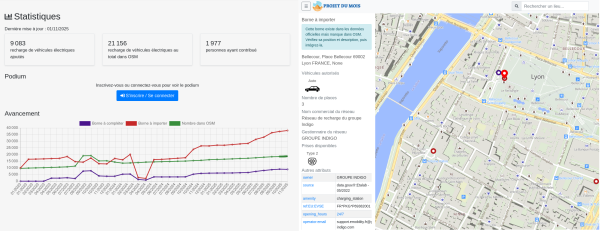
Some news and visions about topic focused contribution monitoring capabilities of ProjetDuMois
Im raising funds to purchase the historic 1:50,000 topographic map series of Eswatini (formerly Swaziland), so I can preserve and share them online as a seamless, zoomable mosaic - free for everyone.
This is the story of how the cycling association measured streets in Bruges and got what they wanted - a cycling zone - 5 years after the initial campaign
W Join Poland zajmujemy się kompleksową likwidacją spółek, pomagając przedsiębiorcom uniknąć błędów i problemów z urzędami. Nasza usługa obejmuje:
I have been mapping addresses on OpenStreetMap since a long time. During this time I have been also frequently referring to the wiki page for guidance whenever I felt my method was wrong.